




Why Fire Sprinkler Systems Flood Buildings: Common Causes and Risks
Fire sprinklers are a vital line of defense in a fire emergency—but when they malfunction, they can cause just as much destruction as the fire they’re meant to stop.
A single fire sprinkler head can discharge over 20 gallons of water per minute. Multiply that by even a few minutes of uncontrolled flow, and you’re looking at saturated drywall, ruined flooring, damaged equipment, and potential moldMold is a type of fungus that grows in damp or humid conditi... More issues within 48 hours.
Whether you’re managing a retail space, warehouse, school, or high-rise office, this kind of sudden floodingFlooding is the overflow or accumulation of water in areas t... More is overwhelming. Here’s what you need to know, what to do immediately, and how to prevent it from happening again.
Why Fire Sprinkler Systems Flood Buildings: Common Causes and Risks
Fire sprinklers are heat-sensitive devices designed to activate individually when exposed to high temperatures, releasing water directly where a fire is detected. But floodingFlooding is the overflow or accumulation of water in areas t... More can happen unexpectedly, and the reasons are varied:
- Unintentional Activation: Sprinkler heads can be accidentally triggered by physical impact (such as construction work or moving furniture) or exposure to extreme temperatures caused by sunlight or nearby heat sources that mimic fire conditions.
- Mechanical or System Failures: Aging or poorly maintained sprinkler systems may have corroded pipes, malfunctioning valves, or pressure imbalances that cause unintended water release.
- Pipe Freezing and Bursting: In cold weather, sprinkler pipes are susceptible to freezing, which causes pipes to crack or burst, leading to massive floodingFlooding is the overflow or accumulation of water in areas t... More.
- Human Errors During Testing or MaintenanceMaintenance is the routine care, inspection, and repair of a... More: Incorrect testing procedures or maintenanceMaintenance is the routine care, inspection, and repair of a... More activities can cause sprinklers to discharge water unintentionally.
Immediate Steps to Take After Your Fire Sprinkler System Floods Your Property
1. Put Safety First: People Come Before Property
Your top priority after a sprinkler system floods your building is ensuring everyone’s safety.
- If you see standing water near electrical outlets or equipment, don’t touch anything until the power is turned off.
- Find your main electrical panel and, if it’s safe, switch off the electricity to avoid the risk of electric shock.
- If the floodingFlooding is the overflow or accumulation of water in areas t... More is severe or there’s a risk of slipping, evacuate the building right away.
2. Quickly Shut Off the Sprinkler System’s Water Supply
The faster you stop the water flow, the less damage you’ll have to deal with.
- Locate the main water shut-off valve for your sprinkler system — it’s usually near the water meter or where the sprinkler pipes enter your building.
- Turn the valve clockwise firmly to close it and stop the floodingFlooding is the overflow or accumulation of water in areas t... More.
- If you can’t find or operate the valve, call building maintenanceMaintenance is the routine care, inspection, and repair of a... More, a plumber, or even the fire department immediately for help.
3. Document the Damage Thoroughly for Insurance
Before you start any cleanup, take lots of clear photos and videos of all flooded areas and damaged items.
- Capture wide shots of entire rooms as well as close-ups of damaged walls, floors, furniture, and valuables.
- Make notes about the extent of the floodingFlooding is the overflow or accumulation of water in areas t... More and its source.
- Keep a record of the date and time you took the pictures and all communication with your insurance company.
4. Start Removing Water—But Only If It’s Safe
If the water isn’t too deep and there’s no risk from electricity, begin to remove standing water to limit further damage.
- Use towels, mops, or wet/dry vacuums to soak up as much water as you can.
- Open windows and doors to improve airflow and help dry out the space.
- Set up fans and dehumidifiers to speed up the dryingDrying is the process of removing moisture from materials, s... More process and reduce moisture in the air.
5. Call a Professional Water Damage Restoration Company Right Away
Restoration experts have the tools and training to properly handle water damage from sprinklers.
- They use heavy-duty equipment like industrial water extractors, moisture meters, and thermal imaging cameras to find hidden water.
- They clean and sanitize affected areas to prevent moldMold is a type of fungus that grows in damp or humid conditi... More and mildewMildew is a type of fungus that grows on damp surfaces, typi... More from developing.
- They also provide detailed reports to support your insurance claim and coordinate any necessary repairs.
6. Have a Thorough Inspection and Repair Plan in Place
Even after the visible water is gone, moisture can linger in hidden spots and cause problems later.
- Hire qualified contractors and inspectors to evaluate drywall, flooring, electrical systems, and HVAC equipment.
- Replace or repairRepair is the act of fixing or restoring damaged property, m... More damaged drywall, insulationInsulation is a material used in buildings to reduce the tra... More, and floors as needed.
- Make sure electrical wiring is inspected and fixed by licensed electricians.
- Confirm that all repairs meet local building codes and safety standards.
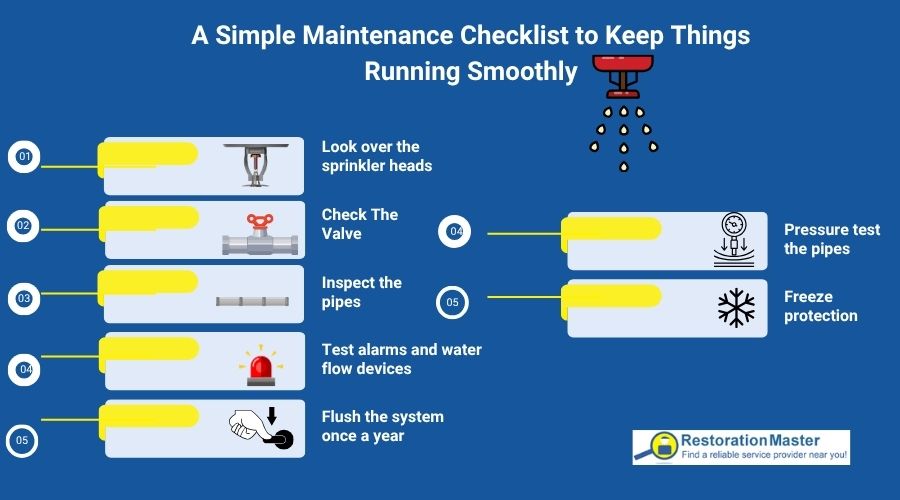
A Simple Maintenance Checklist to Keep Things Running Smoothly
- Look over the sprinkler heads: Check that they’re clean, not painted over, and free from dust or damage. They also need space around them—nothing blocking the spray.
- Check the valves: Make sure all the main water valves are fully open and there are no leaks or signs someone has tampered with them.
- Inspect the pipes: Look for rustRust is a reddish-brown oxide that forms on iron or steel du... More, leaks, or anything that looks out of place, especially in exposed areas.
- Test alarms and water flow devices: Make sure your alarms actually sound when water flows and that any monitoringMonitoring is the ongoing observation and measurement of con... More switches are working.
- Flush the system once a year: This helps get rid of any sediment or buildup inside the pipes.
- Pressure test the pipes: This confirms there aren’t any leaks hiding inside.
- Freeze protection: If you’re somewhere cold, check pipe insulationInsulation is a material used in buildings to reduce the tra... More or heat cables that keep water from freezing and bursting pipes.
How Often Should You Do These Checks?
- Quick monthly checks of valves and gauges (your maintenanceMaintenance is the routine care, inspection, and repair of a... More team can handle this).
- Every few months, test alarms and flow devices.
- Once a year, get a professional in for a full inspectionInspection is the careful examination and assessment of a pr... More, flushing, and testing.
- Every 5 years or so, a deeper inspectionInspection is the careful examination and assessment of a pr... More of pipes and parts might be needed.
Understanding Your Insurance Coverage for Fire Sprinkler Water Damage
Fire sprinklers save lives, but when they accidentally go off or leak, the water damage can be a real hassle. Understanding how your insurance works can make all the difference when it’s time to file a claim.
What Does Insurance Typically Cover?
For businesses, most commercial property insurance policies cover sudden water damage caused by sprinkler discharges. This usually includes damage to the building itself as well as the contents inside.
For homeowners, many policies also cover sprinkler-related water damage, but it’s important to check for any exclusions or special conditions.
Be careful with policies that don’t cover damage resulting from poor maintenanceMaintenance is the routine care, inspection, and repair of a... More or slow leaks—these often aren’t included.
How to Prepare and Manage Your Insurance Claim
- Notify your insurance company as soon as possible after the incidentAn incident is an event or occurrence that causes damage, di... More.
- Take lots of clear photos and videos showing all the damage.
- Keep a detailed timeline of what happened and any steps you’ve taken to minimize the damage.
- Save all receipts for repairs, cleanup, or related services.
- Avoid throwing out damaged items or making permanent repairs until your insurance adjuster has inspected the damage.
- Keep communication open with your adjuster and respond promptly to any requests.
Read: How to File Insurance Claim After Water Damage
Tips for Working with Your Insurance Adjuster
- Be honest and straightforward when explaining what happened.
- Provide professional reports from restorationRestoration is the process of returning a property to its pr... More experts or contractors to support your claim.
- Don’t hesitate to ask questions if you’re unclear about what your policy covers or what the next steps are.
- If your claim becomes complicated, consider hiring a public adjuster who can help negotiate on your behalf.
Contact RestorationMaster for Expert Water Damage Cleanup After Fire Sprinkler Discharge
Frequently Asked Questions
What’s the difference between a sprinkler leak and a full discharge?
A leak is typically a slow drip or minor seepageSeepage is the slow movement of water or other fluids throug... More, often caused by wear and tear, faulty gaskets, or corrosion. These leaks may go unnoticed for days or even weeks. A full discharge, on the other hand, involves a sprinkler head releasing 20 to 25 gallons of water per minute. In a matter of minutes, the affected area can suffer extensive damage, including collapsed ceilings, soaked insulationInsulation is a material used in buildings to reduce the tra... More, and compromised flooring.
What should be done if the sprinkler shut-off valve can’t be located?
If the sprinkler shut-off valve can’t be found right away, time is of the essence. The first step is to get in touch with building maintenanceMaintenance is the routine care, inspection, and repair of a... More or security staff—these teams usually know where the shut-off valves are located. If they’re not available and water is still flowing, don’t wait—call the local fire department. They’re trained to handle these emergencies and can help stop the water.
To avoid this kind of chaos in the future, it’s a good idea to make sure shut-off valves are clearly labeled and included in your building’s emergency response plan. Everyone responsible for the property should know where they are and how to access them quickly.

About Vince Sandri
Vince Sandri is a content writer and blogger with more than 12 years of experience. His expertise is in creating content related to disaster restorationRestoration is the process of returning a property to its pr... More, including information about preventing and reacting to natural disasters like floodingFlooding is the overflow or accumulation of water in areas t... More, water damage, fire and smoke damage, moldMold is a type of fungus that grows in damp or humid conditi... More growth, storm damage and more.
Vince has been the main contributor to RestorationMasterFinder.com since 2014. Over that time, he has written numerous service pages and blogs for disaster restorationRestoration is the process of returning a property to its pr... More providers featured on RestorationMasterFinder.com. Vince has done extensive research and covered a wide range of topics relating to disaster restorationRestoration is the process of returning a property to its pr... More to help homeowners, business owners, and property managers better protect their property. He understands the problems that disasters like floodingFlooding is the overflow or accumulation of water in areas t... More, fire, smoke, and moldMold is a type of fungus that grows in damp or humid conditi... More can cause as well as the best ways to respond to these issues to limit the damage.
Vince completed his Bachelor of Arts degree at Aurora University and his master’s degree at DePaul University. He has been writing SEO website pages, blogs, and press releases since 2012. Vince is also a musician and can be seen playing in the Chicago, IL area.