



Water Bubble on the Ceiling What It Means and What to Do
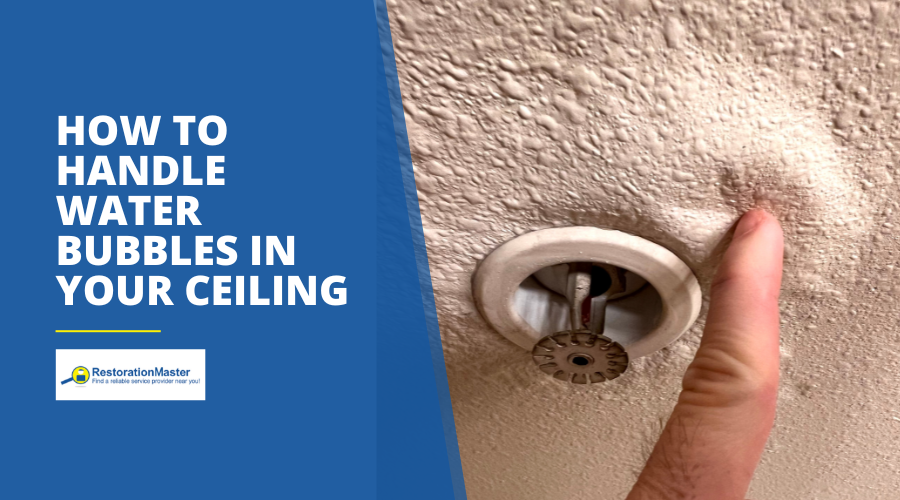
If you’re staring at a water bubble on your ceiling, this is not a wait and see situation. That bubble means water is sitting where it does not belong. In restorationRestoration is the process of returning a property to its pr... More work, we have seen ceilings hold for hours and we have seen them give way without warning. When they fail, they do not leak. They collapse.
Ceiling water damage moves quietly and spreads faster than most people expect. What you can see is rarely the full extent of the problem.
First Things First Check for Safety
Before thinking about cleanup or repairs, make sure the area is safe.
If the bubble is near a ceiling light, fan, or electrical fixture, turn off power to that room immediately. Water and electricity are a dangerous combination.
If the ceiling appears sagged, cracked, or bowed downward, do not stand underneath it. Wet drywall and plasterPlaster is a building material made of lime, gypsum, or ceme... More can hold a large amount of water until they suddenly fail.
If there is any doubt about safety, leave the room and contact a water damage restoration professional.
Is a Water Bubble on the Ceiling Serious
Yes. In most cases, it is more serious than it looks.
A small, tight bubble can indicate a slow or recently stopped leak. Larger or expanding bubbles usually mean a significant amount of water has collected above the ceiling surface.
If the ceiling feels soft or spongy, or if you notice discoloration or musty odors, water has likely been present long enough to affect structural materials or insulationInsulation is a material used in buildings to reduce the tra... More.
When the source of the water is unknown or still active, the damage should always be treated as serious until proven otherwise.
What a Water Bubble on the Ceiling Really Indicates
A water bubble forms when moisture becomes trapped between the ceiling surface and the material above it, typically drywall or plasterPlaster is a building material made of lime, gypsum, or ceme... More. Paint and drywall act like a barrier, holding water in rather than allowing it to drain or evaporate.
As water continues to collect, pressure builds. The ceiling material weakens. Gravity takes over.
In real-world restorationRestoration is the process of returning a property to its pr... More work, a visible ceiling bubble almost always means water has already traveled beyond the immediate area. InsulationInsulation is a material used in buildings to reduce the tra... More, framing, wiring, and even flooring below may already be affected.
In homes with textured or popcorn ceilings, water damage can be even more deceptive, since moisture often spreads behind the texture before visible staining appears. If your ceiling has this finish, learn how popcorn ceilings are affected by water damage and what restorationRestoration is the process of returning a property to its pr... More typically involves.
Common Causes of Water Bubbles in the Ceiling
Water bubbles form on the ceiling as a result of water accumulation between the ceiling material and the surface beneath it. Typically, water bubbles develop from water damage caused by various factors. This is a severe form of water damage that needs to be addressed promptly.
It can happen due to many different reasons:
- Water Leaks: The most common cause of water bubbles is from a leak in the roof, plumbing, or upper floor. When the water leaks, water seeps through the ceiling material.
- AbsorptionAbsorption is the process by which a material takes in or so... More and SaturationSaturation is the point at which a material or environment c... More: As ceiling materials absorb water, they become more saturated. This causes the material to swell and weaken, compromising the structural integrity.
- Trapped Water: Without anywhere for the water to go, it will pool in one area and create a bubble. The materials in the ceiling act as a barrier, trapping the water beneath the surface.
- Low-Quality Paint or PlasterPlaster is a building material made of lime, gypsum, or ceme... More: Paint or plasterPlaster is a building material made of lime, gypsum, or ceme... More that is not waterproof lacks the durability and water resistance of higher-quality materials. A weaker barrier increases the likelihood of absorbing moisture.
- Improper PreparationPreparation is the steps taken to ready a property, equipmen... More Before Painting: The paint should be applied to a completely smooth and drywall. If there is any dirt, dust, or grease on the ceiling surface, this prevents the paint from adhering properly. When a leaking situation occurs, water will pile up, get logged in one area, and drop down to the ceiling.
If water collects above the ceiling, it causes the building materials to separate, resulting in a visual bubble. It is important to address the issue quickly, as it is often an early sign of extensive water damage.
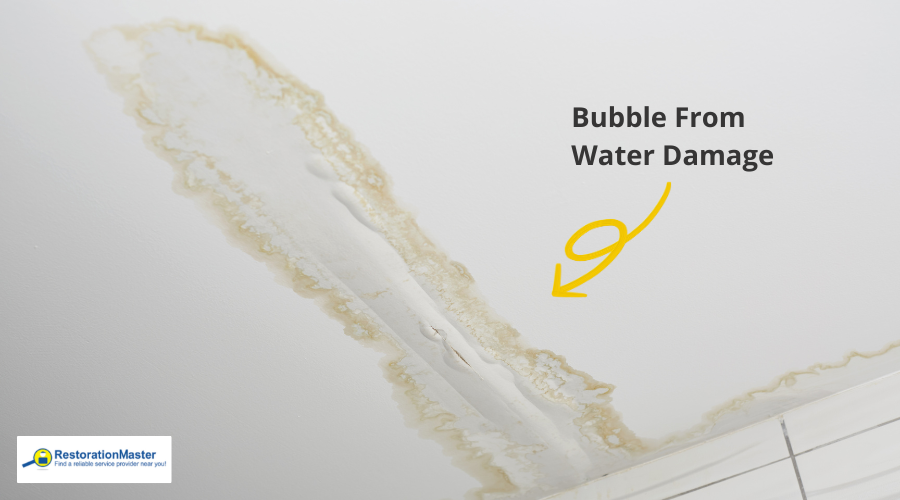
Paint Bubbles vs Drywall Sagging What the Difference Tells You
When someone calls us about a ceiling bubble, one of the first things we determine is whether we are dealing with a paint failure or a saturated ceiling. The difference matters more than most people realize.
A paint bubble forms when moisture reaches the paint layer but has not fully compromised the drywall underneath. The paint loses adhesion and lifts away from the surface, creating a stretched or blistered appearance. In these cases, the ceiling often still feels firm when pressed. This usually means the water intrusion is recent or limited, such as condensation buildup or a short-term leak that has since stopped.
Drywall sagging tells a very different story. When water penetrates the drywall itself, the material begins to absorb and hold moisture. The ceiling may feel soft, heavy, or uneven, and you may see visible drooping or hairline cracks forming around the affected area. At this point, the drywall is no longer structurally sound. It is supporting the weight of trapped water and insulationInsulation is a material used in buildings to reduce the tra... More, and failure becomes a real possibility.
From a restorationRestoration is the process of returning a property to its pr... More standpoint, sagging drywall almost always requires removal. Once drywall has absorbed water, it rarely regains its original strength, even if it appears to dry on the surface.
Should You Pop a Water Bubble on the Ceiling?
This is one of the most common questions homeowners ask.
In many cases, draining the bubble is recommended once the water source has been stopped. The goal is to relieve pressure and prevent the ceiling from collapsing under the weight of trapped water.
Professionals often drain ceiling bubbles intentionally as part of the mitigation process.
To do this safely, place a bucket directly underneath the bubble. Use a small pin or needle and gently puncture the lowest point of the bubble. Allow the water to drain slowly and in a controlled manner.
Do not attempt this if the bubble is very large, heavily sagging, near electrical components, or if the leak is still active. In those situations, professional assistance is the safer option.
Draining the bubble does not solve the problem on its own. It only addresses the immediate pressure.
What Restoration Professionals Look for During an Inspection
When we inspect a ceiling with a water bubble, we are not focused on the surface alone.
We check moisture levels in the ceiling material and surrounding framing to determine how far the water has spread. We inspect insulationInsulation is a material used in buildings to reduce the tra... More above the ceiling, since it can remain saturated long after the surface appears dry. We also look at the direction water traveled, which helps identify whether the source is plumbing, roofing, or condensation related.
Water often travels along joists, pipes, or wiring and shows up far from the actual leak. That is why surface repairs without proper inspectionInspection is the careful examination and assessment of a pr... More frequently fail.
Steps to Handle Water Bubbles on the Ceiling
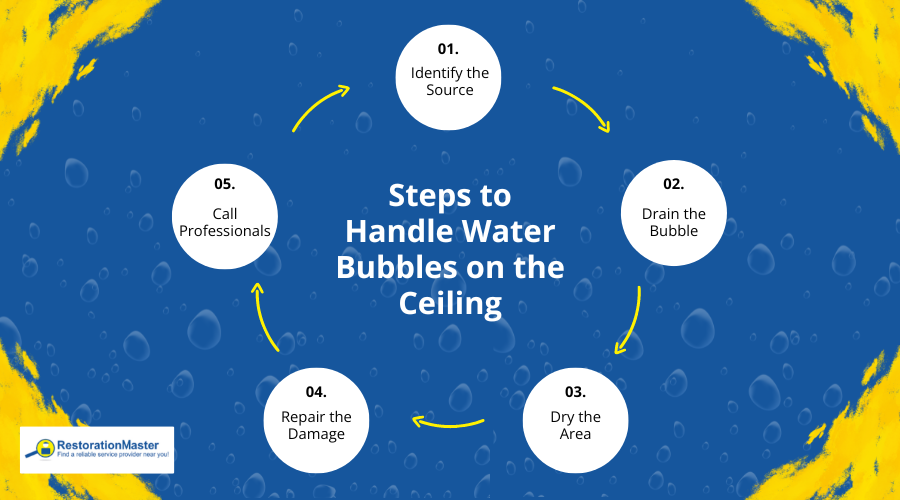
1. Identify the Source
Whenever you experience a water damage issue, you should first detect the source of the water and stop the influx. You should then contact professional water damage restorationWater damage restoration is the professional process of clea... More technicians immediately for emergency dry-out services to prevent water from spreading into porousPorous describes a material that contains small openings or ... More building materials and furnishings. The more bubbles emerge on your ceiling, the more pressure it places on your plasterPlaster is a building material made of lime, gypsum, or ceme... More, potentially leading to a collapse.
2. Drain the Bubble
After identifying the source of the water damage, grab a large bucket and place it underneath the water bubble. Carefully puncture it with a small sharp object, and allow the water to drain into a container. Be cautious as this step could leadLead is a heavy metal that can be toxic to humans, especiall... More to further damage if not done correctly.
If you are uncomfortable with draining the bubble yourself, call the professionals to remove it.
3. Thoroughly Dry the Area
It is imperative to thoroughly dry the area to prevent further damage such as moldMold is a type of fungus that grows in damp or humid conditi... More growth or weakened building materials. Use fans or a dehumidifierA dehumidifier is a device that removes excess moisture from... More to help dry out the affected area. Ensuring there is proper ventilationVentilation is the process of exchanging or circulating air ... More is important for the dryingDrying is the process of removing moisture from materials, s... More process.
4. Repair the Damage
Water damage can impact a variety of materials and surfaces in buildings. Checking and repairing some of the following materials is recommended to prevent moisture buildup.
- Brick Skirting: If the water hasn’t been absorbed by all the wall panels, you’re still safe and don’t have to worry.
- Painted Wall: You can try to limit deterioration by using high-pressure sodium lights to shine upon the ceiling.
- Wood-Paneled Wall: There’s no other option but to remove and clean the wooden wall and cover it again.
- Wall Decals: If the old decal layer is unavoidably damaged; it should be removed and cleared up.
- Laminate FlooringLaminate flooring is a type of flooring made of multiple lay... More: Laminate flooringLaminate flooring is a type of flooring made of multiple lay... More typically has poor moisture resistance. The wood will be retracted when it encounters floodingFlooding is the overflow or accumulation of water in areas t... More. In that case, you should have the boards removed, cleaned, and re-paved.
- Natural Wood Flooring: Natural wood is more resistant to moisture. However, it doesn’t protect it from water damage. You should lightly dry the wet area with a towel.
5. Call Professionals
The cost of self-troubleshooting can end up two or three times more expensive than restorationRestoration is the process of returning a property to its pr... More services. Most insurance carriers would cover house restorationRestoration is the process of returning a property to its pr... More fees; a trusted restorationRestoration is the process of returning a property to its pr... More company can assist you with filing a claim and work with the provider on your behalf. Do not hesitate to call a water damage restoration professional in your region if your home or business is affected by water damage or floodingFlooding is the overflow or accumulation of water in areas t... More. RestorationMaster’s IICRC-certified technicians will provide emergency cleanup and dryingDrying is the process of removing moisture from materials, s... More to remove the excess water and restore your property to its pre-loss state.
How Fast Ceiling Water Damage Gets Worse
In the first few hours, water collects and weakens paint and drywall.
Within 24 to 48 hours, insulationInsulation is a material used in buildings to reduce the tra... More and framing may remain wet even if the surface looks dry, increasing the risk of moldMold is a type of fungus that grows in damp or humid conditi... More growth.
After several days, ceiling materials may lose structural integrity and secondary damageSecondary damage is additional damage that occurs after the ... More such as staining, odors, or microbial growth becomes more likely.
Early action makes a significant difference in repairRepair is the act of fixing or restoring damaged property, m... More cost and scope.
What Not to Do When You See a Ceiling Water Bubble
Do not ignore the problem and hope it dries on its own. Water spreads and causes damage even when it is no longer visible.
Do not repaint the ceiling before proper dryingDrying is the process of removing moisture from materials, s... More is complete. Paint traps moisture and often causes bubbling or peeling to return.
Do not cut large holes into the ceiling unless you know what is above it. Ceiling cavities can hold significant amounts of water.
Do not assume moldMold is a type of fungus that grows in damp or humid conditi... More is not present simply because you cannot see it. MoldMold is a type of fungus that grows in damp or humid conditi... More often grows inside ceiling cavities long before it appears on the surface.
Does Insurance Cover Water Bubbles on the Ceiling
Insurance coverage typically depends on how the water damage occurred.
Sudden and accidental events such as burst pipes or unexpected appliance failures are often covered. Damage caused by long-term leaks, gradual seepageSeepage is the slow movement of water or other fluids throug... More, or lack of maintenanceMaintenance is the routine care, inspection, and repair of a... More is commonly excluded.
A professional restorationRestoration is the process of returning a property to its pr... More company can help document the damage, identify the cause, and assist with the insurance claim process.
When to Call a Water Damage Restoration Professional
If a water bubble appears on your ceiling, moisture has already moved beyond what is visible.
Certified restorationRestoration is the process of returning a property to its pr... More professionals use moisture meters and thermal imaging to locate hidden water and verify when materials are truly dry. This prevents secondary damageSecondary damage is additional damage that occurs after the ... More that can appear weeks or months later.
Ceiling failures can affect multiple areas at once. Addressing the issue correctly the first time helps avoid much larger repairs down the line.
RestorationMasterFinder connects property owners with certified water damage restoration professionals who handle ceiling leaks and moisture damage every day, focusing on both the visible damage and the hidden cause behind it.

About Vince Sandri
Vince Sandri is a content writer and blogger with more than 12 years of experience. His expertise is in creating content related to disaster restorationRestoration is the process of returning a property to its pr... More, including information about preventing and reacting to natural disasters like floodingFlooding is the overflow or accumulation of water in areas t... More, water damage, fire and smoke damage, moldMold is a type of fungus that grows in damp or humid conditi... More growth, storm damage and more.
Vince has been the main contributor to RestorationMasterFinder.com since 2014. Over that time, he has written numerous service pages and blogs for disaster restorationRestoration is the process of returning a property to its pr... More providers featured on RestorationMasterFinder.com. Vince has done extensive research and covered a wide range of topics relating to disaster restorationRestoration is the process of returning a property to its pr... More to help homeowners, business owners, and property managers better protect their property. He understands the problems that disasters like floodingFlooding is the overflow or accumulation of water in areas t... More, fire, smoke, and moldMold is a type of fungus that grows in damp or humid conditi... More can cause as well as the best ways to respond to these issues to limit the damage.
Vince completed his Bachelor of Arts degree at Aurora University and his master’s degree at DePaul University. He has been writing SEO website pages, blogs, and press releases since 2012. Vince is also a musician and can be seen playing in the Chicago, IL area.