




How to Prevent Burst Pipes and Water Damage in Your Home or Business
Frozen and burst pipes are one of the most common causes of winter water damage, especially in homes and businesses with unheated areas. Knowing how to prevent pipe bursts and who to call when they happen can save you thousands in repairs and cleanup.
Why Do Pipes Burst in Cold Weather?
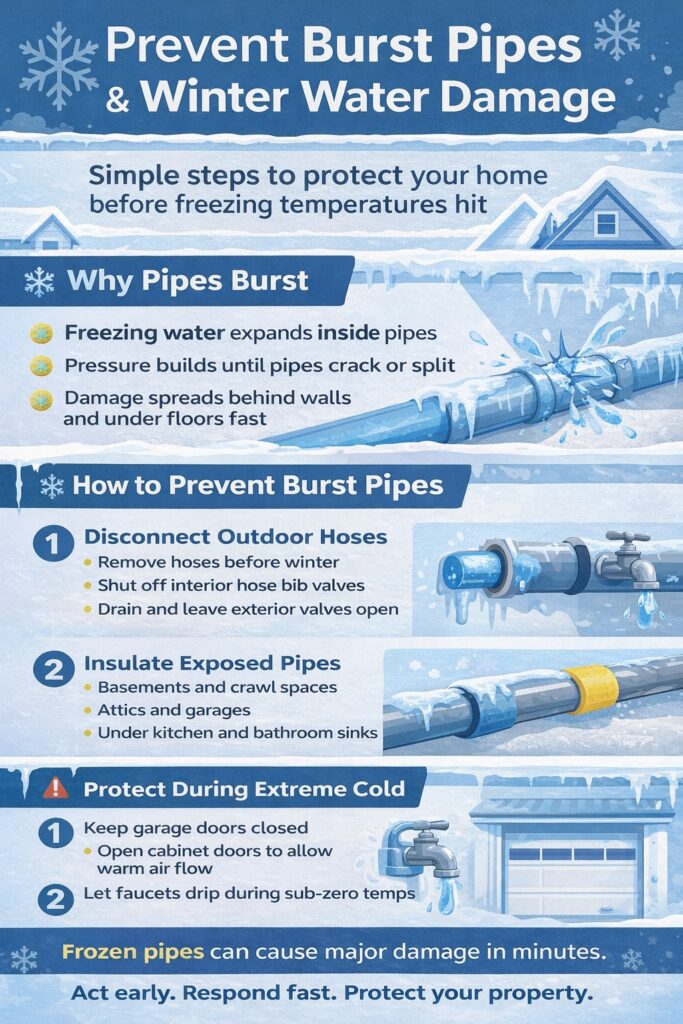
Pipes don’t usually burst because the water freezes solid inside them. They burst because frozen water expands, increasing pressure inside the pipe until it cracks or splits. This can happen in both hot and cold water lines, especially when water is sitting still in cold temperatures.
Common high-risk areas include basements, crawl spaces, attics, garages, and cabinets under sinks.
How to Prevent Pipes From Bursting
Water damage can get everywhere, in your walls & under your floors. Not to mention the damage it causes to the contents in your home or business. Do you know what to do to prevent pipes from bursting? Do you know who to call if they do?
A few helpful hints to prevent pipe bursts in your home include:
* Remove, drain, and carefully store hoses used outdoors. Close inside valves supplying outdoor hose bibs. Open the outside hose taps to allow water to drain. Keep the outside valve open so that any water remaining in the pipe can expand without causing the pipe to break.
* Check around the home for other areas where water supply lines are located and are in unheated areas. Look in basement, crawl space, attic, garage, and under kitchen and bathroom cabinets. Both hot and cold water pipes in these areas should be insulated. A hot water supply line can freeze just as a cold water supply lines can freeze if the water is not running through the pipe and the water temperature in the pipe is cold.
* During cold weather: keep garage doors closed if there are water supply lines in the garage, open kitchen and bathroom cabinet doors to allow warmer air to circulate around the plumbing. When it is very cold outside, let cold water drip from the faucet served by the exposed pipe.
What to Do If a Pipe Bursts
Even with precautions, pipes can still fail. If a pipe bursts:
- Shut off the main water supply immediately.
- Turn off electricity in affected areas if it’s safe to do so.
- Call a professional water damage restorationWater damage restoration is the professional process of clea... More company right away.
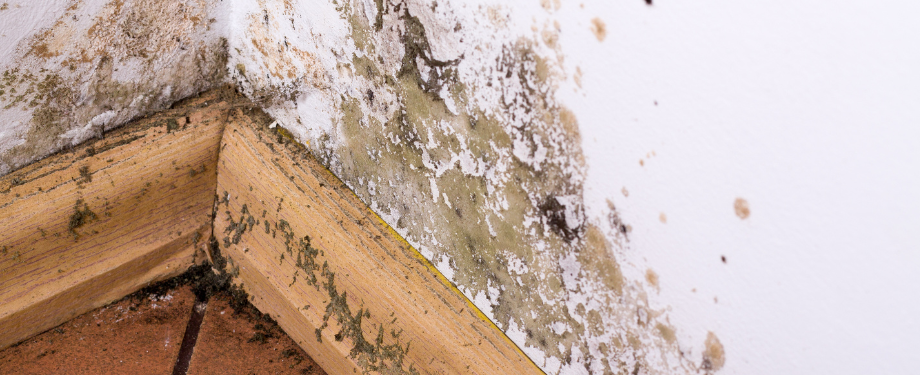
Quick response is critical. Standing water can leadLead is a heavy metal that can be toxic to humans, especiall... More to moldMold is a type of fungus that grows in damp or humid conditi... More growth, warped floors, and structural damage within 24 to 48 hours.
Professional Help After Water Damage
If water damage spreads into walls, floors, or ceilings, professional water extraction and dryingDrying is the process of removing moisture from materials, s... More are essential. RestorationRestoration is the process of returning a property to its pr... More professionals use moisture detection tools, industrial dryingDrying is the process of removing moisture from materials, s... More equipment, and proven methods to fully dry affected areas and prevent long-term damage.
If you have an unfortunate pipe burst in your home and find yourself in need of water damage restoration in Salt Lake City, Utah, contact RestorationMaster in Salt Lake to repairRepair is the act of fixing or restoring damaged property, m... More your house immediately.

About Vince Sandri
Vince Sandri is a content writer and blogger with more than 12 years of experience. His expertise is in creating content related to disaster restorationRestoration is the process of returning a property to its pr... More, including information about preventing and reacting to natural disasters like floodingFlooding is the overflow or accumulation of water in areas t... More, water damage, fire and smoke damage, moldMold is a type of fungus that grows in damp or humid conditi... More growth, storm damage and more.
Vince has been the main contributor to RestorationMasterFinder.com since 2014. Over that time, he has written numerous service pages and blogs for disaster restorationRestoration is the process of returning a property to its pr... More providers featured on RestorationMasterFinder.com. Vince has done extensive research and covered a wide range of topics relating to disaster restorationRestoration is the process of returning a property to its pr... More to help homeowners, business owners, and property managers better protect their property. He understands the problems that disasters like floodingFlooding is the overflow or accumulation of water in areas t... More, fire, smoke, and moldMold is a type of fungus that grows in damp or humid conditi... More can cause as well as the best ways to respond to these issues to limit the damage.
Vince completed his Bachelor of Arts degree at Aurora University and his master’s degree at DePaul University. He has been writing SEO website pages, blogs, and press releases since 2012. Vince is also a musician and can be seen playing in the Chicago, IL area.
Our water pipes are in the addict and one of them burst 6 or 7 years ago. It did some really expensive damage to our ceiling. It’s ready for an arctic freeze now but that was a tough way to learn.
Great info and just in time. Shared across my networks =)
My father was a master plumber & electrician and those are some of the same tips I remember him telling people when I was growing up. He would always tell people to leave ALL faucets dripping (I suppose some homes had poor insulation back when I was growing up). I do remember we never had problems with pipes bursting when it got below freezing and I never have since.
Thank goodness this isn’t something on my to-do list — I live in South Florida — but can understand how valuable these tips are for anyone who lives where it reaches freezing temperatures. And, yes, pipes do burst for other reasons … 😉