






What to Do When the Air Vents Smell Like Sewage
If your air vents emit a sewage-like odorAn odor is a smell, often detectable by the human nose, whic... More, it could indicate that sewageSewage is wastewater containing biological and chemical cont... More gas has infiltrated your home through the heating system. To resolve this, first identify the odor’s source, then address it promptly to prevent hazardous toxins from lingering in the air. If the smell persists for more than a day, contact an experienced restoration expert. They have specialized tools, such as smoke tests and electronic detectors, to pinpoint and eliminate the problem effectively.
Why Do Air Vents Smell Like Sewage?
It is very important to first find the source of the sewageSewage is wastewater containing biological and chemical cont... More gas odorAn odor is a smell, often detectable by the human nose, whic... More. By identifying the source, you can figure out if the issue can be addressed as a DIY project or if you should call a professional. Make sure you check the following to find the source of the odorAn odor is a smell, often detectable by the human nose, whic... More:
Gas source
A sewer odorAn odor is a smell, often detectable by the human nose, whic... More in your home typically indicates an issue originating from your septic tank or the sewer system. This unpleasant smell often enters through the pipes, particularly when the p-trap beneath a sink, tub, or toilet dries out. The p-trap usually dries up when left unused for an extended period.
Air intake that is nearby
When you switch on your heater, air is drawn through an intake, typically where the air filter is located. Once inside, fans in the ducts warm the air before it reaches your home’s vents. If there’s a dry p-trap near the heat intake, it might cause odors to be drawn in. While the air filter is effective at capturing dirt and debris, it won’t eliminate smells. Consequently, a sewageSewage is wastewater containing biological and chemical cont... More odorAn odor is a smell, often detectable by the human nose, whic... More could circulate throughout your home.
Duct leak
Typically, the ductwork for your heating system and plumbing pipes is situated beneath your floors. A leak in the main sewer or septic line can cause sewageSewage is wastewater containing biological and chemical cont... More odors to spread under your home. If the septic tank is close to an air vent, the smell may enter your home even more rapidly, making it noticeable sooner.
AC condensate lines
If you’re detecting a sewer odorAn odor is a smell, often detectable by the human nose, whic... More in your home originating from the condensate drain line outside your heating unit, it may indicate that this line is connected to your home’s main drainage system. Without proper venting or trapping, sewer or septic tank gases can infiltrate your A/C unit and spread through your duct system. To prevent this, ensure a trap is installed on the line.
Toilets
If you have a toilet that is worn or has an improperly sealed wax ring, you can end up with leaked sewer gas. In this case, you will need to replace this seal.
How to Eliminate Sewage Gas Smell
To eliminate the sewageSewage is wastewater containing biological and chemical cont... More gas smell in your home, you must address the specific underlying issue. Consider focusing on the following to eliminate the odorAn odor is a smell, often detectable by the human nose, whic... More:
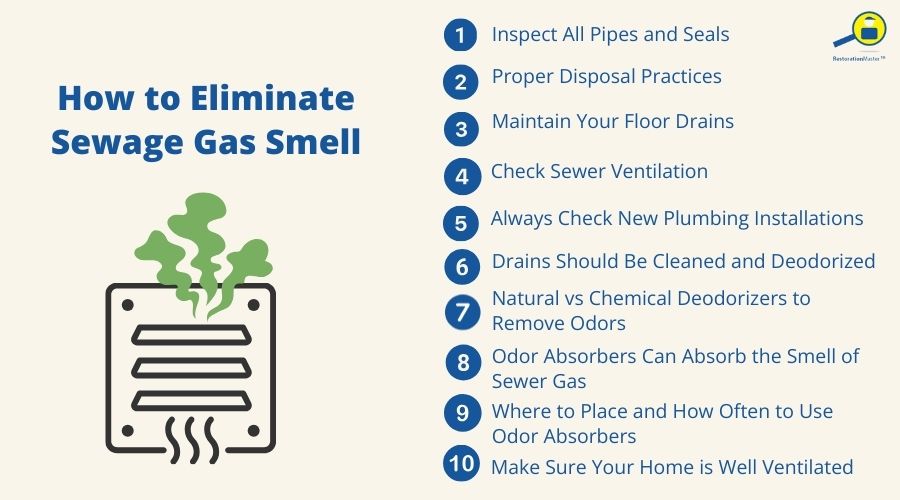
Inspect All Pipes and Seals
To effectively eliminate the sewer gas odorAn odor is a smell, often detectable by the human nose, whic... More, start by identifying its source and then meticulously inspect and repairRepair is the act of fixing or restoring damaged property, m... More any damaged pipes and seals. Begin with a visual examination of all exposed plumbing to spot significant wear or damage. Then, listen for leaks within your walls, which could indicate hidden issues. If you enjoy DIY projects, you might tighten fittings or replace worn washers on your own. However, for substantial damage in hard-to-reach areas, professional assistance is necessary.
Maintain Your Floor Drains
Occasionally, sewer gas odors may emanate from floor drains, particularly if they’re seldom used. To prevent this, simply pour water down the drain to refill the trap, blocking the gas from entering your home. Additionally, regularly clean the drains with a mixture of vinegar and baking soda to eliminate odor-causing debris.
Always Check New Plumbing Installations
New plumbing installations can occasionally leadLead is a heavy metal that can be toxic to humans, especiall... More to sewer gas odors if ventilationVentilation is the process of exchanging or circulating air ... More is inadequate or if the installation is flawed. It’s crucial to ensure that newly installed plumbing is inspected and complies with building codes and standards for proper ventilationVentilation is the process of exchanging or circulating air ... More and trap installation. If you’re unsure how to handle this, it’s advisable to consult a professional.
Drains Should Be Cleaned and Deodorized
Regularly cleaning and deodorizing your drains is essential. To do this, mix hot water, vinegar, and baking soda to create a fizzing reaction that breaks down debris and buildup. Pour the mixture down the drain, followed by some hot water to flush out any loosened materials.
Natural vs Chemical Deodorizers to Remove Odors
To clean your drains, you can choose between natural and chemical deodorizers. Natural options include lemon peels and vinegar, while chemical deodorizers are specialized cleaners designed for plumbing systems. Consider your comfort level with each method and the severity of the odorAn odor is a smell, often detectable by the human nose, whic... More issue when deciding on the best approach.
Odor Absorbers Can Absorb the Smell of Sewer Gas
Numerous odorAn odor is a smell, often detectable by the human nose, whic... More absorbers are available on the market that are designed to neutralize sewer gas smells. Alternatively, placing a bowl of white vinegar or baking soda nearby can effectively absorb the odorAn odor is a smell, often detectable by the human nose, whic... More just as well.
Where to Place Odor Absorbers and How Often Should They Be Used
OdorAn odor is a smell, often detectable by the human nose, whic... More absorbers should be used near the source of the smell. If you have an ongoing issue, make sure to refresh the absorbers every few weeks or as needed depending on the specific product and its lifespan, as well as the severity of the odorAn odor is a smell, often detectable by the human nose, whic... More.
Make Sure Your Home is Well Ventilated
Ensuring your home is well-ventilated is essential to avoid the unpleasant odorAn odor is a smell, often detectable by the human nose, whic... More of sewer gas. Use fans, keep windows open, or consider installing exhaust fans in bathrooms and the kitchen. Proper ventilationVentilation is the process of exchanging or circulating air ... More will help disperse odors and lower humidityHumidity is the amount of moisture or water vapor present in... More levels effectively.
RestorationMaster: Your Go-To Source To Find Sewage Cleanup Experts
SewageSewage is wastewater containing biological and chemical cont... More odors are extremely unpleasant and can make your home uncomfortable. The presence of these odors can also be a sign of a more pressing sewageSewage is wastewater containing biological and chemical cont... More issue that must be addressed to prevent significant property damage. If you encounter such an odorAn odor is a smell, often detectable by the human nose, whic... More in your home, take the steps mentioned above to identify and address the source of the odorAn odor is a smell, often detectable by the human nose, whic... More. If you cannot remove the odorAn odor is a smell, often detectable by the human nose, whic... More yourself, or you encounter a sewageSewage is wastewater containing biological and chemical cont... More issue when looking for the source of the odorAn odor is a smell, often detectable by the human nose, whic... More, make sure to call a restorationRestoration is the process of returning a property to its pr... More professional immediately.
Disaster restorationRestoration is the process of returning a property to its pr... More professionals are experts when it comes to identifying and removing sewageSewage is wastewater containing biological and chemical cont... More odors as well as sewage cleanup for homes and buildings affected by sewageSewage is wastewater containing biological and chemical cont... More backups. These professionals use the proper equipment to remove sewageSewage is wastewater containing biological and chemical cont... More water and contaminated materials, and they can effectively clean, restore, and disinfect the affected areas and materials. They also use advanced deodorization methods to eliminate lingering sewageSewage is wastewater containing biological and chemical cont... More odors.
If your home is affected by a lingering sewageSewage is wastewater containing biological and chemical cont... More smell or a sewageSewage is wastewater containing biological and chemical cont... More backup, reach out to a restorationRestoration is the process of returning a property to its pr... More professional in your area right away.
Frequently Asked Questions
what does sewageSewage is wastewater containing biological and chemical cont... More gas smell like?
SewageSewage is wastewater containing biological and chemical cont... More gas has a very distinct and unpleasant odorAn odor is a smell, often detectable by the human nose, whic... More, often described as resembling rotten eggs. This smell is primarily due to the presence of hydrogen sulfide, a gas produced by the breakdown of organic materialsOrganic materials are derived from living organisms, such as... More in sewageSewage is wastewater containing biological and chemical cont... More. The stench can be overpowering and is a clear indicator of potential plumbing issues or sewer line problems. In addition to hydrogen sulfide, sewageSewage is wastewater containing biological and chemical cont... More gas can contain other compounds like methane and ammonia, which contribute to its foul smell.
Is sewageSewage is wastewater containing biological and chemical cont... More smell harmful?
The smell of sewageSewage is wastewater containing biological and chemical cont... More can be harmful. SewageSewage is wastewater containing biological and chemical cont... More gas contains various toxic and potentially dangerous components, such as hydrogen sulfide, methane, ammonia, and carbon dioxide.
- Hydrogen sulfide: Even at low levels, this gas can cause irritation to the eyes, nose, and throat. Higher concentrations can leadLead is a heavy metal that can be toxic to humans, especiall... More to more severe health issues, such as headaches, dizziness, nausea, and respiratory problems. Prolonged exposure can be life-threatening.
- Methane: While not toxic in small amounts, methane is highly flammable and can pose a significant explosion risk if it accumulates in an enclosed space.
- Ammonia: Exposure to ammonia can cause irritation to the eyes, nose, and throat, and at higher levels, it can leadLead is a heavy metal that can be toxic to humans, especiall... More to coughing, wheezing, and shortness of breath.
- Other pathogensPathogens are microorganisms such as bacteria, viruses, or f... More: SewageSewage is wastewater containing biological and chemical cont... More gas can also contain harmful bacteria and virusesViruses are microscopic infectious agents that can only repr... More, posing additional health risks.
Does lime kill sewageSewage is wastewater containing biological and chemical cont... More smell?
lime can help reduce or eliminate sewageSewage is wastewater containing biological and chemical cont... More smells. Lime, particularly quicklime (calcium oxide) or hydrated lime (calcium hydroxide), is commonly used in waste treatment and odorAn odor is a smell, often detectable by the human nose, whic... More control because of its alkaline properties. Here’s how it works:
- Neutralizes Acidity: Lime raises the pH level of the sewageSewage is wastewater containing biological and chemical cont... More, neutralizing the acidic compounds that contribute to the foul smell.
- Reduces OdorAn odor is a smell, often detectable by the human nose, whic... More: By altering the pH, lime can help reduce the release of volatile compounds like hydrogen sulfide, which is responsible for the characteristic “rotten egg” smell.
- Promotes Decomposition: Lime can help accelerate the breakdown of organic materialsOrganic materials are derived from living organisms, such as... More, reducing the buildup of compounds that cause odorAn odor is a smell, often detectable by the human nose, whic... More.
How to use lime for controlling sewageSewage is wastewater containing biological and chemical cont... More odors?
- Safety Precautions: Wear protective gear, including gloves, masks, and goggles, to avoid contact with lime, which can be caustic.
- Application: Sprinkle lime over the affected area or add it to the sewageSewage is wastewater containing biological and chemical cont... More. The amount needed will depend on the volume and severity of the odorAn odor is a smell, often detectable by the human nose, whic... More.
- Mixing: Ensure thorough mixing for effective odorAn odor is a smell, often detectable by the human nose, whic... More control. In some cases, it might be necessary to reapply lime periodically.

About Vince Sandri
Vince Sandri is a content writer and blogger with more than 12 years of experience. His expertise is in creating content related to disaster restorationRestoration is the process of returning a property to its pr... More, including information about preventing and reacting to natural disasters like floodingFlooding is the overflow or accumulation of water in areas t... More, water damage, fire and smoke damage, moldMold is a type of fungus that grows in damp or humid conditi... More growth, storm damage and more.
Vince has been the main contributor to RestorationMasterFinder.com since 2014. Over that time, he has written numerous service pages and blogs for disaster restorationRestoration is the process of returning a property to its pr... More providers featured on RestorationMasterFinder.com. Vince has done extensive research and covered a wide range of topics relating to disaster restorationRestoration is the process of returning a property to its pr... More to help homeowners, business owners, and property managers better protect their property. He understands the problems that disasters like floodingFlooding is the overflow or accumulation of water in areas t... More, fire, smoke, and moldMold is a type of fungus that grows in damp or humid conditi... More can cause as well as the best ways to respond to these issues to limit the damage.
Vince completed his Bachelor of Arts degree at Aurora University and his master’s degree at DePaul University. He has been writing SEO website pages, blogs, and press releases since 2012. Vince is also a musician and can be seen playing in the Chicago, IL area.