



Storm Damage Prevention Checklist: Protecting Your Home from Every Type of Storm
Severe weather can strike at any time, bringing strong winds, heavy rain, hail, or even tornadoes. Without preparationPreparation is the steps taken to ready a property, equipmen... More, these events can cause major property damage, destroy personal belongings, and leadLead is a heavy metal that can be toxic to humans, especiall... More to costly repairs. Understanding how storm damage happens and what preventive steps you can take helps safeguard your home and minimize repairRepair is the act of fixing or restoring damaged property, m... More costs.
This guide covers the main causes of storm damage, the most common types of property damage, and a complete storm damage preventionPrevention refers to actions taken to reduce the likelihood ... More checklist you can follow year-round. You’ll also learn what to do immediately after a storm and when to call professionals for restorationRestoration is the process of returning a property to its pr... More.
Why Storm Damage Happens
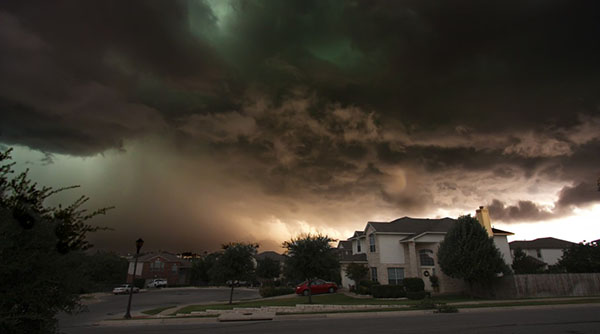
According to NOAA, the U.S. sustained 403 weather and climate disasters from 1980-2024, where overall costs exceeded $2.9 trillion. Storm damage occurs as a result of complex interactions between atmospheric and oceanic conditions. When warm and cold air masses collide, the resulting shifts in pressure and temperature can trigger storms, ranging from severe thunderstorms to hurricanes. The intensity of these storms is influenced by factors such as wind speed, temperature differences, and moisture levels in the atmosphere.
In coastal areas, hurricanes and tropical storms can create additional hazards like storm surges. As winds circulate the eye of a hurricane, they generate vertical movement in the ocean, pushing water toward the shore. Onshore winds can amplify this surge, leading to significant floodingFlooding is the overflow or accumulation of water in areas t... More and extensive property damage. The severity of storm surges is influenced by the storm’s size, strength, approach angle, and the shape of the coastline.
Even inland, storms can cause damage through heavy rainfall, floodingFlooding is the overflow or accumulation of water in areas t... More, strong winds, and hail. These forces can weaken roofs, break windows, topple trees, and disrupt power lines. Understanding why storms cause damage helps homeowners take proactive steps to protect their property and reduce potential losses.
Common Types of Storm Damage and How to Prevent Them
It’s important to be aware of the different types of storm damage that can occur in your area. Understanding the risks not only helps you know what to expect but also guides you in taking steps to prevent or minimize damage. Here are some of the most common types of storm-related damage and how to prevent them:
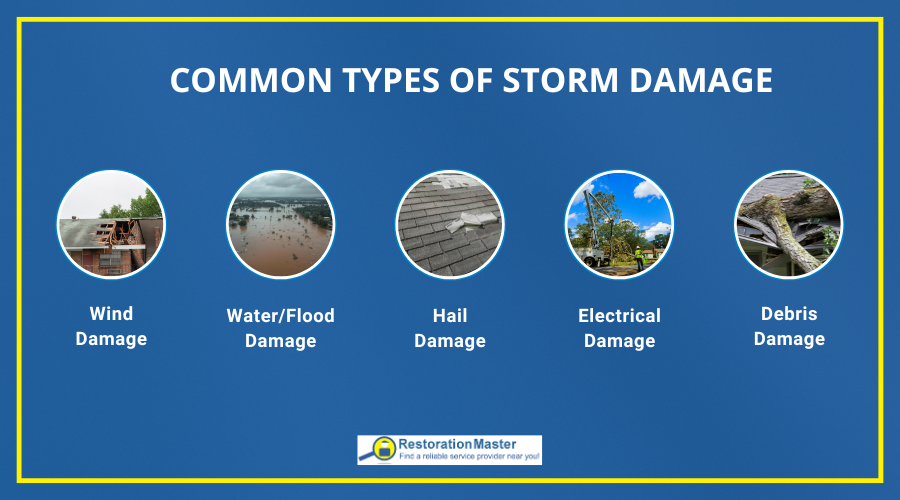
Wind Damage: Protecting Your Roof and Siding
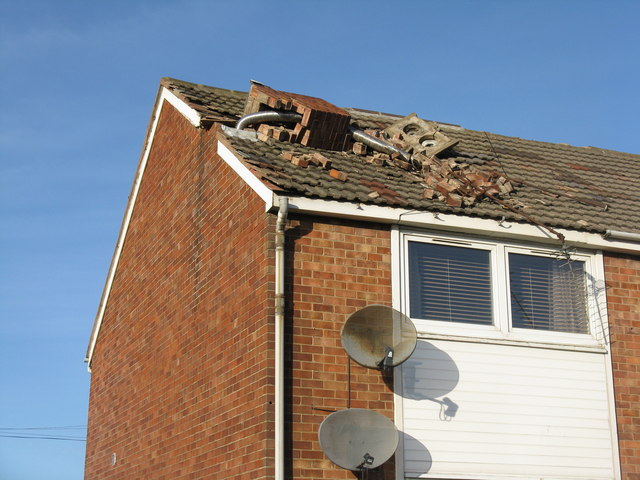
Strong winds can rip shingles, loosen siding, and send debris flying. According to The Insurance Information Institute (III), hail and wind damage accounted for nearly 40% of homeowners’ insurance claims in 2021.
To prevent this:
- Inspect and replace missing or damaged shingles
- Reinforce roof edges with wind-resistant materials
- TrimTrim is the decorative or functional molding used to finish ... More trees near your home and power lines
- Anchor outdoor structures like sheds or gazebos
Water and Flood Damage: Safeguarding Your Basement and Foundation
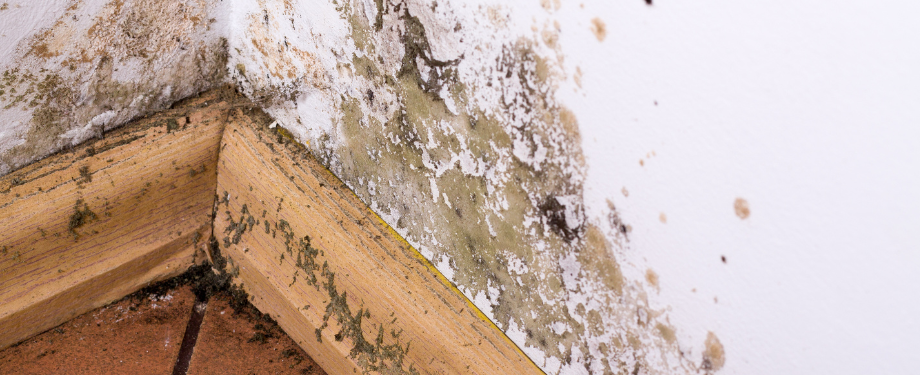
FloodingFlooding is the overflow or accumulation of water in areas t... More weakens your home’s structureStructure refers to the framework or components of a buildin... More and causes long-term moldMold is a type of fungus that grows in damp or humid conditi... More issues. The Federal Emergency Management Agency (FEMA) estimates that one inch of water in a home can cause more than $25,000 in damage to property and belongings.
Protect your foundation by:
- Inspecting for cracks or gaps in the foundation
- Ensuring gutters and downspouts direct water away
- Installing or testing a sump pumpA sump pump is a pump installed in a basement or crawlspace ... More system
- Applying waterproof sealant to the basement walls
- Using watertight covers on basement windows
Hail Damage: Shielding Your Roof, Siding, and Vehicles
Hailstorms can destroy shingles, dent gutters, and crack windows. On average, hail causes $1.5 billion in property damage in the U.S. each year, with roofs and siding being the most commonly affected areas.
Reduce risks by:
- Installing impact-resistant roofing materials
- Parking vehicles in covered areas when possible
- Scheduling annual roof inspections after storm season
- Repairing dents and cracks promptly to prevent leaks
Lightning and Electrical Damage: Protecting Electronics
Power surges during storms can destroy electronics and wiring.
To prevent this:
- Unplug electronics before severe weather hits
- Use surge protectors or whole-home surge suppression systems
- Keep a charged power bank and portable generator on hand
- Switch devices to battery-saver mode during outages
Tree and Debris Damage: Preventing Outdoor Hazards
Fallen branches are a common cause of roof and siding damage.
To prepare:
- Prune trees regularly and remove dead branches
- Keep trees healthy through watering and fertilization
- Hire a certified arborist for inspectionInspection is the careful examination and assessment of a pr... More if needed
- Secure patio furniture and outdoor decor before storms
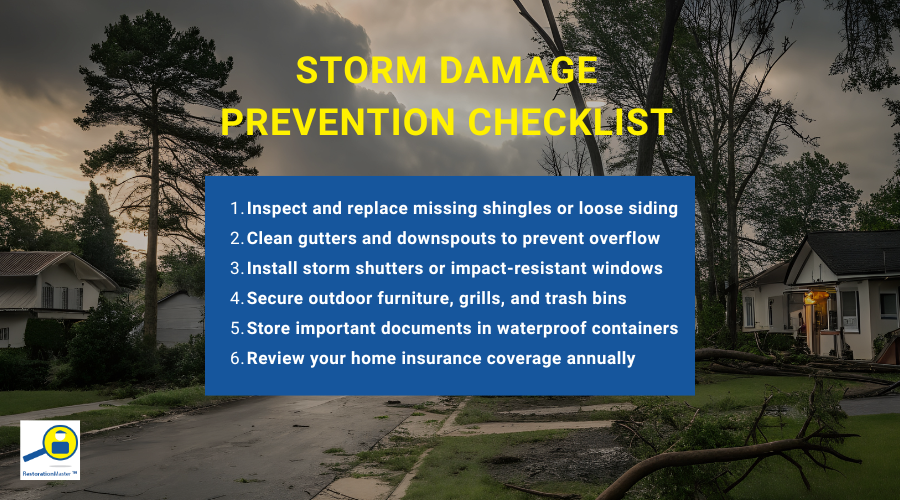
Complete Storm Damage Prevention Checklist
Preparing your home before a storm is one of the most effective ways to minimize damage and protect your property. Storms can bring high winds, heavy rain, and flying debris, all of which can compromise your roof, siding, windows, and outdoor areas. By taking proactive steps, you can reduce the risk of costly damage and keep your home and family safe.
Here are some essential measures you should take to protect your home:
- Inspect and replace missing shingles or loose siding
- Clean gutters and downspouts to prevent overflow
- Install storm shutters or impact-resistant windows
- Secure outdoor furniture, grills, and trash bins
- Store important documents in waterproof containers
- Review your home insurance coverage annually
Preparing Your Home for Specific Storms
Storms can cause a wide range of damage, from floodingFlooding is the overflow or accumulation of water in areas t... More and structural damage to power outages and personal injury. Understanding the differences between storm types and the specific risks each one poses can help you take the right precautions to protect your home, family, and property. Being prepared in advance not only reduces potential damage but also gives you peace of mind during severe weather. Here’s how to prepare for the most common types of storms:
Hurricanes
For hurricanes, it’s essential to secure outdoor items, gather an emergency kit and supplies, and know your local evacuation zone. Establish a designated meeting point for your household, create a pet care plan, and assign responsibilities to all family members so everyone knows their role during the storm.
Tornadoes
Tornadoes require a rapid response. Stay informed by monitoringMonitoring is the ongoing observation and measurement of con... More local news and alerts, and take shelter in a basement or reinforced interior room away from windows. Keep an emergency supply kit nearby and practice tornado drills with your household so everyone knows exactly what to do.
Severe Thunderstorms
Before a severe thunderstorm, trimTrim is the decorative or functional molding used to finish ... More trees near your home, secure any loose objects, and ensure all windows and doors are closed. Protect electronics by unplugging them or using surge protectors to prevent damage from power fluctuations.
Winter Storms
Winter storms can cause damage from ice, snow, and freezing temperatures. Inspect your roof for loose shingles, install storm shutters, and reinforce garage doors to prevent structural damage. Taking these steps helps minimize the risk of freezing and water damage to your property.
What to Do After a Storm
While every storm is different, the steps you take after a storm are often similar and can make a big difference in keeping your family safe and minimizing further damage to your property. According to the American Red Cross, homes that are dried within 24-48 hours after floodingFlooding is the overflow or accumulation of water in areas t... More are much less likely to develop moldMold is a type of fungus that grows in damp or humid conditi... More or secondary structural damage. After a residential storm, it’s important to act carefully and methodically to ensure safety and begin the recovery process.
Here’s what you should do after storm damage:
- Ensure everyone’s safety: Make sure all family members are accounted for and contact authorities if you need emergency assistance. If it is safe to move around your home or property, proceed with caution, as you may encounter broken glass, exposed wires, leaking gas lines, or other hazards.
- Check for immediate hazards: Before inspecting damage, look for safety risks such as downed power lines, exposed wires, gas leaks, or unstable structures. Avoid entering heavily damaged areas until you’re sure they’re safe. If you smell gas or see sparks, evacuate immediately and contact your utility company or local authorities.
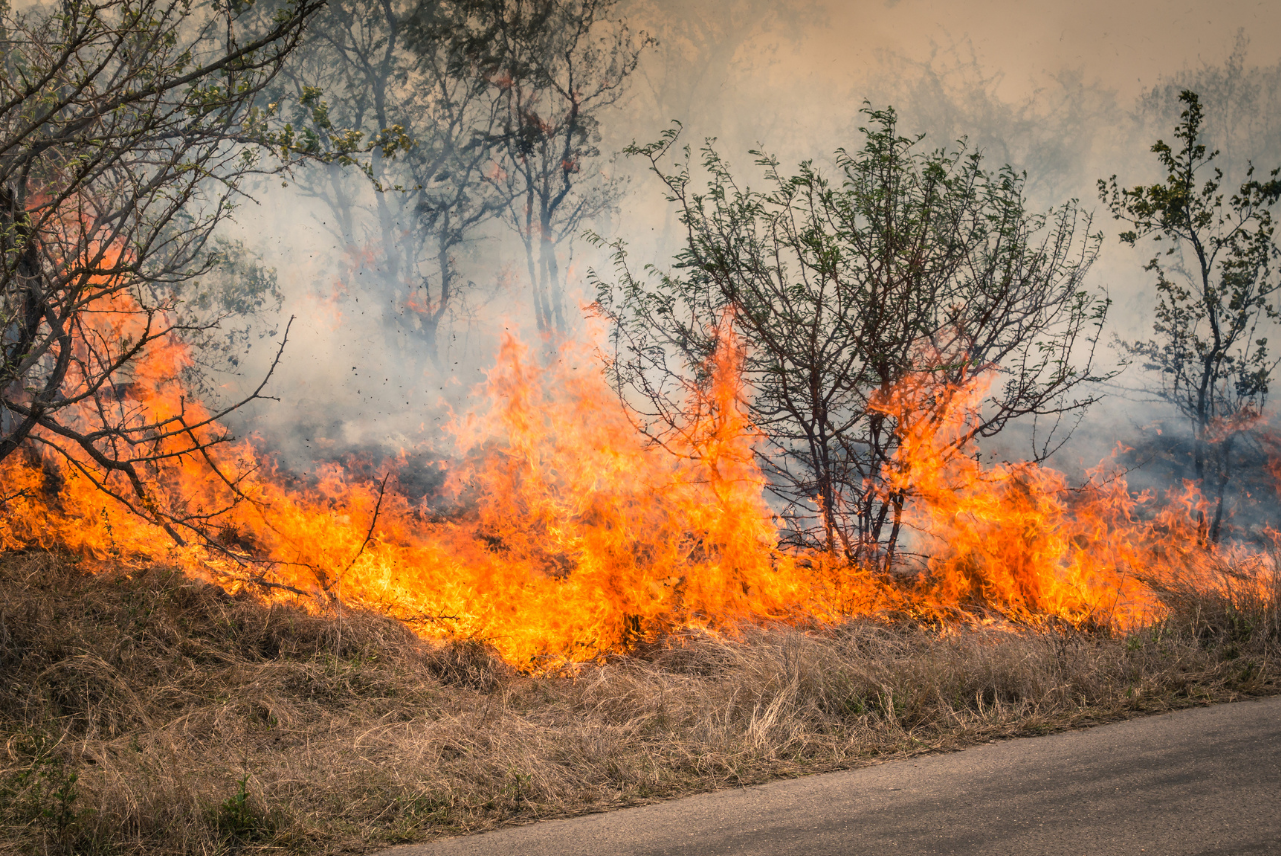
- Document all storm damage: Take photos or videos of structural damage, including broken doors and windows, roof or siding damage, water intrusion, fire damage, or moldMold is a type of fungus that grows in damp or humid conditi... More. Detailed documentation is important for insurance claims and restorationRestoration is the process of returning a property to its pr... More efforts.
- Avoid standing water: Floodwater can contain contaminants, sharp debris, or hidden electrical hazards. Do not walk through or touch it until the power is shut off and it’s deemed safe. Contact a professional water damage restoration company to remove the water and dry affected areas to prevent moldMold is a type of fungus that grows in damp or humid conditi... More and further damage.
- Contact a professional damage restorationRestoration is the process of returning a property to its pr... More company: Experienced professionals have the tools, equipment, and expertise to safely repairRepair is the act of fixing or restoring damaged property, m... More storm damage and restore your home to its pre-storm condition.
Recovering from Storm Damage: When to Call the Professionals
Even with the best preparationPreparation is the steps taken to ready a property, equipmen... More, storms can leave behind unexpected damage, especially water intrusion that can compromise your home’s structureStructure refers to the framework or components of a buildin... More and leadLead is a heavy metal that can be toxic to humans, especiall... More to moldMold is a type of fungus that grows in damp or humid conditi... More growth. Addressing water damage quickly is crucial to preventing long-term problems and ensuring your home remains safe and habitable.
Professional water damage restoration experts have the training, equipment, and experience to assess the full extent of the damage, remove excess water, dry affected areas, and restore your home efficiently. They can also help identify hidden issues like moisture behind walls or under flooring that could leadLead is a heavy metal that can be toxic to humans, especiall... More to moldMold is a type of fungus that grows in damp or humid conditi... More if left untreated.
If your home has experienced floodingFlooding is the overflow or accumulation of water in areas t... More, leaks, or water intrusion after a storm, contact a certified water damage restorationWater damage restoration is the professional process of clea... More company immediately. Acting quickly can minimize repairRepair is the act of fixing or restoring damaged property, m... More costs, prevent secondary damageSecondary damage is additional damage that occurs after the ... More, and give you peace of mind knowing your home is being properly restored.
Storm Damage Preparation FAQs
What are 10 items in an emergency kit?
An emergency kit should include the essentials to keep your family safe for at least three days. Key items include water, non-perishable food, a flashlight with extra batteries, and a first aid kit. You should also have a battery-powered or hand-crank radio, personal hygiene supplies, basic tools, medications, important documents stored in a waterproof container, and blankets or sleeping bags. Having these items prepared ensures you can respond quickly during a storm or other disaster.
Will FEMA pay for storm damage?
FEMA may provide financial assistance for damage caused by federally declared disasters, but coverage is limited. Assistance can include temporary housing, essential home repairs to make a property safe, and replacement of certain essential personal items. FEMA typically requires that insurance claims be filed first, and aid is only available in areas officially declared as federal disaster zones.
How do I prepare my house for a severe storm?
Preparing your home for severe weather involves both securing your property and planning for emergencies. Start by inspecting your roof, siding, and windows for any vulnerabilities and repairing them. Remove loose outdoor items and secure furniture to prevent damage from high winds. Clean gutters and downspouts to avoid floodingFlooding is the overflow or accumulation of water in areas t... More, and consider installing storm shutters or impact-resistant windows. Finally, stock an emergency kit and ensure your family knows your evacuation plan and safety procedures.
What are the 5 P’s of preparednessPreparedness is the state of being ready to respond to emerg... More?
The 5 P’s of preparednessPreparedness is the state of being ready to respond to emerg... More provide a simple framework for emergency planning. They focus on ensuring the safety of people, including family members and pets, securing prescriptions and medical supplies, keeping important papers and documents safe, and having cash or credit cards available in case of power or banking outages. Following these principles helps families respond quickly and safely during storms or other emergencies.

About Beth Markowski-Roop
Beth Markowski-Roop is an experienced and knowledgeable professional in the disaster restorationRestoration is the process of returning a property to its pr... More industry for over 12 years since 2012. She has a proven track record in marketing, sales, public relations, and media. Beth is an engaging public speaker and has led workshops and seminars in various industries. She has worked with ServiceMaster Restore and ServiceMaster Clean as a Business Development Manager and Field Marketing Manager, providing support to franchise owners. Beth is currently the Marketing & Sales Director for ServiceMaster By Mason, focusing on disaster restorationRestoration is the process of returning a property to its pr... More and floorcare services. She also works closely with hoarding clients and conducts seminars on the hoarding disorder.