






Is it Safe to Sleep on a Moldy Mattress? (2026 Cleaning & Safety Guide)
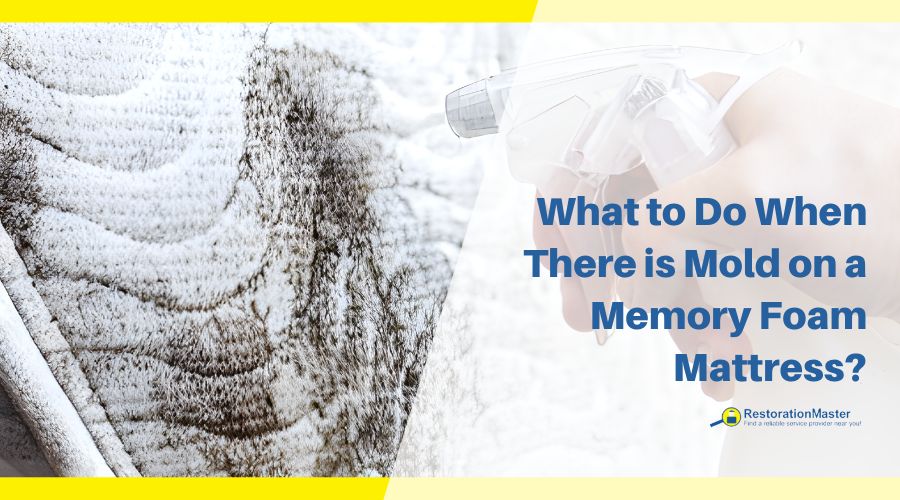
Mold can grow on mattress
Read This First If You Are Dealing With Mattress Mold
If you have asthma allergies a weakened immune system or ongoing respiratory issues you should not attempt to clean a moldy mattress yourself. Mold spores are microscopic and become airborne as soon as memory foam is disturbed. Even brief exposure can trigger coughing breathing difficulty eye irritation or asthma symptoms in sensitive individuals.
In these situations replacing the mattress or consulting a certified mold professional is the safest choice.
Can You Save a Moldy Memory Foam Mattress?
This is the most important question and it should be answered before any cleaning begins.
Memory foam is highly porous. It absorbs moisture and holds it deep inside the foam structure. Once mold reaches the internal cells, surface cleaning does not remove the contamination or stop regrowth.
- Replace the mattress if any of the following are true
- Mold covers more than a small isolated area
- A strong musty odor remains after drying
- Mold is visible along seams or appears to originate inside the foam
- You experience coughing, congestion, or breathing symptoms that worsen at night
In these cases, cleaning the surface does not eliminate the health risk. Mold inside memory foam almost always returns.
Cleaning may be reasonable only if all of the following apply
- Mold is limited to a small surface spot
- It was caused by a recent spill or short term humidity issue
- The mattress is less than five years old
- No strong odor remains once the mattress is fully dry
If there is any uncertainty, replacement is usually the safer option.
Why Memory Foam is a Magnet for Mold
Memory foam is designed to retain heat and contour to the body. These same characteristics make it vulnerable to mold when moisture is present.
Common contributing factors include:
- Dense foam restricts airflow and slows drying
- Sweat, body oils, and skin cells accumulate and feed mold growth
- Liquids soak downward into the foam core instead of evaporating
Because moisture can remain trapped for long periods, mold can develop even in clean, well maintained homes.
How to Clean Surface Mold on a Mattress Safely- The IICRC Protocol
If you have determined the mold is strictly on the surface, follow this professional-grade cleaning sequence.
1. Professional PPE (Personal Protective Equipment): Do not start without an N95 respirator, non-latex gloves, and eye protection. You will be agitating spores; you must not inhale them.
2. HEPA Vacuuming (The Essential Step): Standard vacuums will blow spores back into the room. Use only a vacuum with a certified HEPA filter.
- Vacuum the affected area slowly.
- Vacuum the entire mattress (top, bottom, and sides) to catch dormant spores.
- Immediate Action: Empty the vacuum canister or bag into a sealed trash bag outside your home.
3. Controlled Antimicrobial Spot-Treatment: Memory foam should never be soaked. Excess liquid will cause more mold inside the mattress.
- Isopropyl Alcohol Solution: Mix a 1:1 ratio of 70% rubbing alcohol and water. Alcohol is effective at penetrating the cell walls of many common household molds.
- The Technique: Lightly dampen a microfiber cloth and blot the area. Do not scrub, as this pushes spores deeper into the foam pores.
- Alternative: 3% Hydrogen Peroxide is effective but may bleach certain mattress fabrics. Test a small area first.
4. Forced Dehydration: Moisture is the enemy. Once cleaned, the mattress must dry at a rate that prevents regrowth.
- UV Exposure: If possible, move the mattress into direct sunlight. UV-C rays are a natural disinfectant.
- Mechanical Drying: Use a high-velocity fan or a dehumidifier set to 30% humidity in a closed room to “pull” moisture out of the foam.
How to Clean a Moldy Mattress | Watch Video
When Mattress Mold Indicates a Larger Moisture Problem
In many cases, a moldy mattress is a symptom of an underlying moisture issue in the room or home.
Professional help should be considered if:
- Mold returns after cleaning
- Mold appears on walls, bed frames, or baseboards
- Indoor humidity remains consistently high
- Health symptoms appear or worsen
Professionals trained under IICRC standards can identify moisture sources and help prevent future mold growth. While contaminated mattresses are rarely salvageable, addressing the environment protects your health and replacement bedding.
20 Tips to Avoid Mold on Your Mattress
The best way to deal with mold is to keep your mattress—and your bedroom—dry and well-ventilated. These habits make a big difference over time.
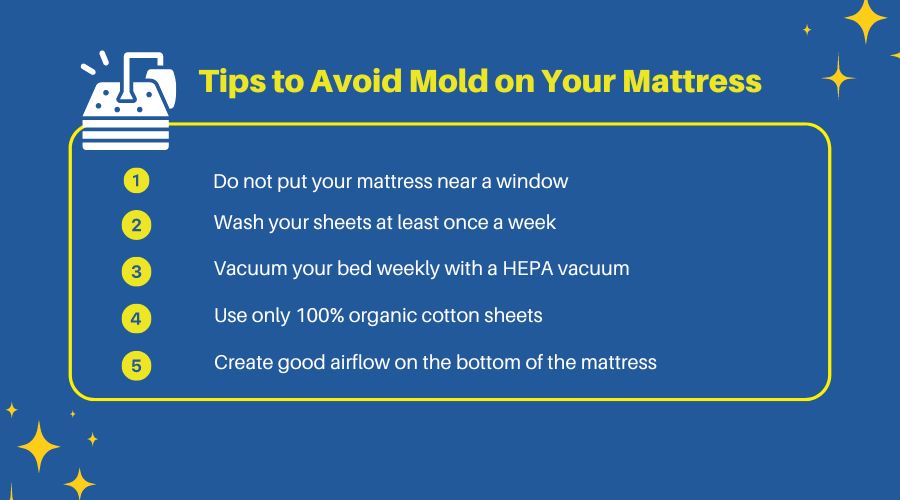
how to prevent mold on mattress
Keep the Mattress Itself Fresh
- Replace very old mattresses: If your mattress is over ten years old, it may already have invisible moisture and mold buildup. Consider replacing it with a newer, more breathable model.
- Choose breathable designs and materials: All mattresses can develop mold, but breathable materials like natural latex, wool, and rubberized coconut fiber are more resistant. Mattresses with coils and springs also allow more airflow than solid foam designs.
- Use a breathable, waterproof mattress protector: Look for protectors that block spills and sweat from soaking into the mattress while still allowing air circulation.
- Air out the mattress regularly: A few times a year, strip the bed, stand the mattress upright, and let it air out for several hours.
- Give your mattress light: When you can, pull back the covers and let daylight reach the mattress surface to help keep it dry.
- Vacuum the mattress weekly: Use a HEPA vacuum with an upholstery attachment on the top and sides to remove dust, skin cells, and potential food sources for mold.
Improve Airflow Around the Bed
- Use a slatted bed base instead of a solid board or placing it on the floor: Slats allow air to move under the mattress, helping moisture evaporate.
- Allow bedroom air to circulate: Keep the door slightly open, run a ceiling or floor fan, or use your HVAC system to keep air moving in and out of the room.
- Be careful with windows: Don’t place your mattress against a drafty or leaky window. If the mattress must be near a window, be sure the frame is properly sealed and condensation is not dripping onto the bed.
Control Moisture and Humidity
- Wash sheets at least once a week: This reduces sweat, body oils, and skin flakes that can hold moisture and feed mold.
- Replace pillows regularly: Pillows trap moisture, too. Replacing them at least once a year helps keep the whole bed fresher.
- Avoid going to bed wet: Always dry off completely after a shower, bath, or pool before lying down.
- Don’t place wet towels or clothes on the bed: Even a damp towel can introduce enough moisture for mold to start forming over time.
- Control bathroom moisture: If your bedroom has an attached bathroom, run the fan, open a window when possible, and keep the door closed while showering to reduce humidity entering the bedroom.
- Use a dehumidifier in humid climates: Aim to keep indoor humidity ideally below 50–60%. A dehumidifier in the bedroom can dramatically reduce mold risk in damp regions.
- Consider an air purifier if you’ve had mold issues before: An air purifier with a HEPA filter can help capture airborne mold spores and other particles.
Read: How to Prevent Mold in High Humidity Areas of Your Home
Everyday Habits That Help
- Shower and change into clean clothes before bed: This reduces the number of mold spores, dust, and pollen that end up in your bedding.
- Clean and dry spills immediately: If anything spills on the mattress, remove bedding, blot the area, and use fans or sunlight to dry it as quickly as possible.
- Avoid eating in bed: Crumbs are a food source not just for pests but also for molds and bacteria.
- Rotate or flip (if allowed) your mattress periodically: Rotating or flipping per the manufacturer’s instructions helps air reach different areas and prevents moisture from settling in one spot.
What Type of Mattress Should I Buy to Prevent Mold?
No mattress is completely mold-proof, but some designs handle moisture better than others:
- Natural latex and wool are naturally resistant to mold and dust mites and tend to be more breathable.
- Coil or hybrid mattresses allow more airflow than solid foam, helping moisture escape.
- Mattresses with charcoal or moisture-wicking layers can help manage humidity, but they’re still not a substitute for good ventilation and humidity control.
When shopping, look for:
- Breathable covers and natural materials
- Minimal glued layers and low-VOC construction
- A supportive, slatted bed base to go underneath
- Always check the manufacturer’s care instructions so you know how to clean and maintain the mattress properly.
Frequently Asked Questions
Is it safe to sleep on a mattress with mold?
Of course not. sleeping on a moldy mattress can pose health risks, including respiratory issues, allergies, and skin irritation. It’s advisable to clean the mattress thoroughly or consider replacing it if the mold infestation is extensive.
Can I remove mold from a mattress topper?
If your mattress topper can be taken off, you can carefully clean it using gentle methods like a vinegar or hydrogen peroxide solution, making sure it dries completely in sunlight or a well-ventilated area. For toppers where mold has penetrated deeply or cannot be removed, it is usually safer and healthier to replace the topper entirely rather than risk recurring mold or exposure to spores.
Can I use bleach to clean mold off my mattress?
It’s not recommended. Bleach can damage the mattress material and may not effectively eliminate mold spores. Instead, use gentler solutions like hydrogen peroxide or rubbing alcohol, which are safer for the mattress and effective against mold.
Can a mattress protector prevent mold?
Yes, using a waterproof mattress protector can help prevent moisture from seeping into the mattress, reducing the risk of mold growth. You need to make sure that the protector is breathable to allow air circulation.
Should I rotate or flip my mattress to prevent mold?
Yes, giving your mattress a regular flip or rotation can make a big difference. It allows air to circulate evenly, keeps moisture from settling in one spot, and helps stop mold from taking hold, keeping your bed fresh and safe to sleep on.
Should I throw away a mattress with mold?
Yes, in many cases tossing the mattress is the safest option. If mold has penetrated deeply into the foam or fabric, cleaning may not remove all spores, putting your health at risk. Even after cleaning, hidden mold can return, especially in humid conditions. For memory foam or older mattresses, replacement ensures a clean, safe sleeping environment and prevents recurring mold exposure.
Can you get black mold out of foam?
Partially, but it depends on the extent of contamination. Surface mold on foam can sometimes be removed with solutions like diluted hydrogen peroxide or vinegar, combined with thorough drying in sunlight. However, if black mold has soaked into the inner layers of foam, it is nearly impossible to eliminate completely. In such cases, replacement is strongly recommended to avoid ongoing health risks.
When to Call a Professional For Professional Mold Remediation
Mold on a mattress is often a sign of a bigger moisture problem in the room or home—such as high humidity, a leak, or a past water incident. Even if you replace the mattress, mold can return if the underlying issue isn’t corrected.
A professional mold remediation company follows industry standards such as the ANSI/IICRC S520 for safe and effective mold cleanup. They can:
- Inspect your home for hidden moisture and mold growth
- Identify and address the source of humidity or leaks
- Safely remove mold from affected building materials
- Help you prevent future mold problems
While professionals typically cannot salvage a heavily mold-contaminated mattress, they can help make your home healthier and protect your new mattress and other belongings from future mold growth.

About Chris Carey
With over 35 years of experience in the restoration industry, Chris Carey is a seasoned leader dedicated to helping businesses and homeowners recover from disasters. As the President of ServiceMaster by Disaster Associates, he has built a reputation for providing exceptional restoration services, specializing in water, fire, and mold remediation. Chris’s expertise in disaster recovery, combined with his commitment to customer service and industry innovation, has positioned ServiceMaster by Disaster Associates as a trusted name in the field.