





How Long Does It Take to Test Your Home for Mold?
Key Summary: MoldMold is a type of fungus that grows in damp or humid conditi... More testing protects your health, property, and indoor air qualityIndoor air quality (IAQ) refers to the condition of the air ... More by detecting hidden moldMold is a type of fungus that grows in damp or humid conditi... More, with results typically available in 3–7 days, and guides professional removal and preventionPrevention refers to actions taken to reduce the likelihood ... More if needed.
Maintaining good indoor air qualityIndoor air quality (IAQ) refers to the condition of the air ... More through regular moldMold is a type of fungus that grows in damp or humid conditi... More inspectionInspection is the careful examination and assessment of a pr... More and testing is essential for protecting the health of you and your family. MoldMold is a type of fungus that grows in damp or humid conditi... More growth in your home can pose serious health risks, making it critical to address any suspicions of moldMold is a type of fungus that grows in damp or humid conditi... More immediately. If you suspect moldMold is a type of fungus that grows in damp or humid conditi... More in your property, testing is the first step to ensure its presence is identified so you can take steps to have it removed. In this article, we’ll discuss why moldMold is a type of fungus that grows in damp or humid conditi... More testing is important, how long the process typically takes, and the key steps involved in effectively addressing the issue.
Signs You May Need a Mold Inspection
If you’re unsure whether testing is necessary, watch for these warning signs:
- Musty or earthy odors in certain rooms
- Unexplained allergy or asthma flare-ups
- Visible water stains or peeling paint
- High humidityHumidity is the amount of moisture or water vapor present in... More or condensation on windows
- History of water damage or floodingFlooding is the overflow or accumulation of water in areas t... More
Early detection of moldMold is a type of fungus that grows in damp or humid conditi... More can save you thousands in remediation costs and protect your family’s health.
How Long Does it Take to Test Your Home for Mold? | RestorationMaster Video
Why You Should Test Your Home for Mold
To protect your loved ones and your property, it’s crucial to test for mold if you suspect its presence. MoldMold is a type of fungus that grows in damp or humid conditi... More can develop rapidly in the right environment, spreading quickly and causing significant damage. Professional testing not only identifies the extent of the issue but also provides insights into the condition of your indoor environment. According to the U.S. Environmental Agency, moldMold is a type of fungus that grows in damp or humid conditi... More testing should be conducted by professionals who have experience in moldMold is a type of fungus that grows in damp or humid conditi... More sampling protocols and sampling methods.
Understanding the level of moldMold is a type of fungus that grows in damp or humid conditi... More contaminationContamination is the presence of harmful or unwanted substan... More is the first step toward taking action. Here are a few compelling reasons why moldMold is a type of fungus that grows in damp or humid conditi... More testing is essential:
1. Safeguard Your Health
MoldMold is a type of fungus that grows in damp or humid conditi... More releases tiny sporesSpores are microscopic reproductive units of fungi or mold t... More into the air, which can pose serious health risks when inhaled. For those with allergies or asthma, moldMold is a type of fungus that grows in damp or humid conditi... More exposure can worsen symptoms like coughing, sneezing, congestion, and skin irritation. Prolonged exposure to certain types of moldMold is a type of fungus that grows in damp or humid conditi... More, such as black moldMold is a type of fungus that grows in damp or humid conditi... More (StachybotrysStachybotrys is a type of black mold (often called “black ... More chartarum), can leadLead is a heavy metal that can be toxic to humans, especiall... More to even more severe health complications. This is why it’s crucial to test your home for moldMold is a type of fungus that grows in damp or humid conditi... More using certified moldMold is a type of fungus that grows in damp or humid conditi... More assessment methods, even before visible signs appear or health issues arise. If moldMold is a type of fungus that grows in damp or humid conditi... More is detected, it’s essential to remove it promptly and thoroughly to protect your health and well-being.
2. Protect Your Property
MoldMold is a type of fungus that grows in damp or humid conditi... More can wreak havoc on your property, especially in moisture-prone areas like basements and attics, causing structural damage and leading to costly, often avoidable remediation. It thrives in damp, concealed areas like basements, crawl spaces, and behind walls, making it difficult to detect in its early stages. Without proper testing, moldMold is a type of fungus that grows in damp or humid conditi... More can go unnoticed until the damage becomes severe. This is why moldMold is a type of fungus that grows in damp or humid conditi... More testing is essential—it allows for early detection, prevents further damage, and helps you avoid expensive repairs. Protect your property by addressing moldMold is a type of fungus that grows in damp or humid conditi... More issues before they escalate.
3. Find Hidden Mold
MoldMold is a type of fungus that grows in damp or humid conditi... More isn’t always visible; it often hides within walls, beneath floors, or in other hard-to-reach areas. Hidden moldMold is a type of fungus that grows in damp or humid conditi... More can continue to spread undetected, posing serious health risks to your family. If you suspect its presence, it’s crucial to have your property professionally tested. Comprehensive testing should include indoor air quality testingIndoor air quality (IAQ) testing is the process of measuring... More for moldMold is a type of fungus that grows in damp or humid conditi... More and surface sampling to identify hidden moldMold is a type of fungus that grows in damp or humid conditi... More colonies behind walls, under floors, and in other concealed spaces. This process not only pinpoints the affected areas but also determines the type of moldMold is a type of fungus that grows in damp or humid conditi... More present, empowering you to make informed decisions about effective remediation and preventionPrevention refers to actions taken to reduce the likelihood ... More.
4. Improve Indoor Air Quality (IAQ)
Maintaining good air quality is essential for the health and well-being of your family. When moldMold is a type of fungus that grows in damp or humid conditi... More sporesSpores are microscopic reproductive units of fungi or mold t... More are present in the air, they can compromise your home’s indoor air qualityIndoor air quality (IAQ) refers to the condition of the air ... More (IAQ) and potentially cause respiratory problems. Conducting professional moldMold is a type of fungus that grows in damp or humid conditi... More testing, including moldMold is a type of fungus that grows in damp or humid conditi... More spore count testing, is a vital step in identifying the concentration of moldMold is a type of fungus that grows in damp or humid conditi... More in your indoor air. This knowledge allows you to take the necessary steps to improve air quality and create a healthier living environment.
5. Ensure You Meet Proper Real Estate Requirements
When buying or selling a home, a mold inspection may become a necessary step in the real estate process. Often, both buyers and sellers opt for professional moldMold is a type of fungus that grows in damp or humid conditi... More inspectionInspection is the careful examination and assessment of a pr... More services to ensure the property is free from moldMold is a type of fungus that grows in damp or humid conditi... More issues, providing peace of mind, meeting real estate requirements, and protecting the home’s value.
6. Complying with Regulations
Certain regions have strict regulations and guidelines for moldMold is a type of fungus that grows in damp or humid conditi... More testing and remediation, often tied to insurance requirements. Adhering to these regulations is essential to ensure compliance and avoid potential legal issues. Conducting moldMold is a type of fungus that grows in damp or humid conditi... More testing not only satisfies these requirements but also helps prevent complications down the road.
MoldMold is a type of fungus that grows in damp or humid conditi... More testing plays a crucial role in maintaining a safe and healthy environment for you and your loved ones. It safeguards both your well-being and your property while ensuring compliance with real estate and regulatory standards.
Related Read: What is the Lifecycle of Household Mold?
Step-By-Step Mold Testing Process
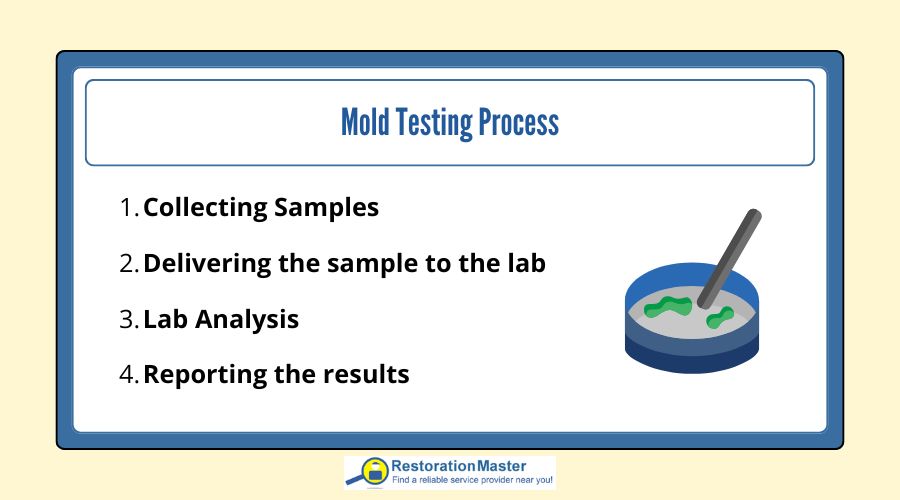
MoldMold is a type of fungus that grows in damp or humid conditi... More assessors do more than just identify moldMold is a type of fungus that grows in damp or humid conditi... More problems; they educate homeowners on the potential impacts of moldMold is a type of fungus that grows in damp or humid conditi... More growth and guide them on preventing future issues. If moldMold is a type of fungus that grows in damp or humid conditi... More removal is required, they offer support throughout the process, ensuring homeowners aren’t left to handle the problem on their own. This process helps identify the type of moldMold is a type of fungus that grows in damp or humid conditi... More present by capturing moldMold is a type of fungus that grows in damp or humid conditi... More sporesSpores are microscopic reproductive units of fungi or mold t... More for lab analysis, a critical step in certified moldMold is a type of fungus that grows in damp or humid conditi... More assessment and accurate remediation planning. The following steps outline how this is done:
| Step | Description | Timeframe | Key Purpose |
|---|---|---|---|
| Sample Collection | The inspector gathers air or surface samples from suspected areas. | 1–2 hours | Capture moldMold is a type of fungus that grows in damp or humid conditi... More sporesSpores are microscopic reproductive units of fungi or mold t... More or visible growth. |
| Lab Delivery | Samples were sent to a certified moldMold is a type of fungus that grows in damp or humid conditi... More testing lab. | Same day | Ensure accurate, unbiased analysis. |
| Lab Analysis | Identify moldMold is a type of fungus that grows in damp or humid conditi... More type and measure concentration levels. | 1–3 days | Determine severity and potential health risks. |
| Results & Report | Receive detailed findings and remediation recommendations. | 1–2 business days | Guide next steps for removal and preventionPrevention refers to actions taken to reduce the likelihood ... More. |
Why Hire a Certified Mold Remediation Specialist
If moldMold is a type of fungus that grows in damp or humid conditi... More is found, it’s best to call a certified mold remediationMold remediation is the process of identifying, removing, an... More specialist rather than attempting removal yourself. Professionals can locate all moldMold is a type of fungus that grows in damp or humid conditi... More growth, including hidden colonies behind walls, under flooring, and in HVAC systems. Using advanced equipment, containment methods, and industry-approved cleaning agents, they ensure complete removal without spreading sporesSpores are microscopic reproductive units of fungi or mold t... More to unaffected areas.
Beyond cleanup, remediation experts can repairRepair is the act of fixing or restoring damaged property, m... More damage caused by moldMold is a type of fungus that grows in damp or humid conditi... More, treat affected surfaces to prevent regrowth, and recommend humidityHumidity is the amount of moisture or water vapor present in... More control solutions to protect your home from future outbreaks. Partnering with an experienced professional ensures the problem is addressed thoroughly, so you can return to a safe, healthy, and mold-free living environment.
Professional Mold Testing and Remediation
A safe and healthy home starts with proactive moldMold is a type of fungus that grows in damp or humid conditi... More testing and, when necessary, professional mold remediation to fully eliminate the source of contaminationContamination is the presence of harmful or unwanted substan... More. Early detection allows homeowners to act quickly, protecting health, preserving property value, and maintaining good indoor air qualityIndoor air quality (IAQ) refers to the condition of the air ... More. Whether you’re safeguarding your family, meeting real estate requirements, or avoiding costly structural damage, moldMold is a type of fungus that grows in damp or humid conditi... More testing provides the critical information needed to take the next step toward resolution.
FAQs About Testing Your Home for Mold
How long does mold remediationMold remediation is the process of identifying, removing, an... More take?
It depends on the size and severity of the problem, but most jobs take anywhere from 1–5 days, including containment, removal, and cleanup.
Can I stay in my home during moldMold is a type of fungus that grows in damp or humid conditi... More removal?
For small areas, you might be able to stay, but for larger projects or if toxic moldMold is a type of fungus that grows in damp or humid conditi... More is present, it’s usually safest to leave until the work is complete.
What’s the difference between moldMold is a type of fungus that grows in damp or humid conditi... More testing and mold remediationMold remediation is the process of identifying, removing, an... More?
MoldMold is a type of fungus that grows in damp or humid conditi... More testing identifies if moldMold is a type of fungus that grows in damp or humid conditi... More is present, its type, and how much is in your home. Mold remediationMold remediation is the process of identifying, removing, an... More removes the moldMold is a type of fungus that grows in damp or humid conditi... More and fixes the source to prevent it from coming back.
Does homeowners’ insurance cover moldMold is a type of fungus that grows in damp or humid conditi... More removal?
It depends on your policy. Many plans cover moldMold is a type of fungus that grows in damp or humid conditi... More if it’s caused by a covered event, like a burst pipe, but not from ongoing moisture problems.
How do professionals find hidden moldMold is a type of fungus that grows in damp or humid conditi... More?
They use tools like moisture meters, thermal imaging cameras, and indoor air quality testingIndoor air quality (IAQ) testing is the process of measuring... More to detect moldMold is a type of fungus that grows in damp or humid conditi... More behind walls, under floors, and in HVAC systems.

About Vince Sandri
Vince Sandri is a content writer and blogger with more than 12 years of experience. His expertise is in creating content related to disaster restorationRestoration is the process of returning a property to its pr... More, including information about preventing and reacting to natural disasters like floodingFlooding is the overflow or accumulation of water in areas t... More, water damage, fire and smoke damage, moldMold is a type of fungus that grows in damp or humid conditi... More growth, storm damage and more.
Vince has been the main contributor to RestorationMasterFinder.com since 2014. Over that time, he has written numerous service pages and blogs for disaster restorationRestoration is the process of returning a property to its pr... More providers featured on RestorationMasterFinder.com. Vince has done extensive research and covered a wide range of topics relating to disaster restorationRestoration is the process of returning a property to its pr... More to help homeowners, business owners, and property managers better protect their property. He understands the problems that disasters like floodingFlooding is the overflow or accumulation of water in areas t... More, fire, smoke, and moldMold is a type of fungus that grows in damp or humid conditi... More can cause as well as the best ways to respond to these issues to limit the damage.
Vince completed his Bachelor of Arts degree at Aurora University and his master’s degree at DePaul University. He has been writing SEO website pages, blogs, and press releases since 2012. Vince is also a musician and can be seen playing in the Chicago, IL area.