


How to Dry Flooded Carpet: Step-by-Step Guide

If your home has been affected by floodingFlooding is the overflow or accumulation of water in areas t... More or heavy rain, water may seep into your carpets. Acting quickly is essential. While you can attempt to dry and clean the carpet yourself, it’s always best to call in professionals. They can prevent mold growth and use specialized equipment, like industrial fans, to thoroughly dry the area and minimize further damage. This is especially important to avoid costly issues, such as structural damage to your property.
In this article, we’ll cover the different categories of water damage, key considerations before dryingDrying is the process of removing moisture from materials, s... More your carpet, and the necessary steps to properly dry a wet carpet — including how to dry wet carpet after floodingFlooding is the overflow or accumulation of water in areas t... More effectively.
Categories of Water Damage You Should Know
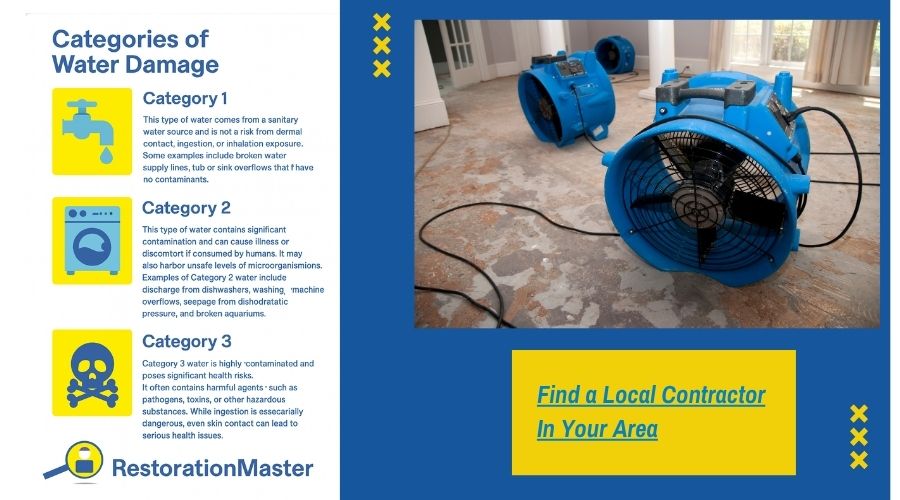
There are three key categories that determine the source and purity of water when it soaks your carpet or floods your home. Understanding these categories is crucial for deciding how to remove the water and addressing potential risks during the dryingDrying is the process of removing moisture from materials, s... More process. Here’s what you need to know to make informed decisions quickly:
Category 1
This type of water comes from a sanitary water source and is not a risk from dermal contact, ingestion, or inhalation exposure. Some examples include broken water supply lines, tub or sink overflows that have no contaminants, appliance malfunctions, snow or ice that has melted, rainwater, or broken toilet tanks and toilet bowls.
Category 2
This type of water contains significant contaminationContamination is the presence of harmful or unwanted substan... More and can cause illness or discomfort if consumed by humans. It may also harbor unsafe levels of microorganisms. Examples of Category 2 water include discharge from dishwashers, washing machine overflows, seepageSeepage is the slow movement of water or other fluids throug... More from hydrostatic pressure, and broken aquariums.
Category 3 Water
Category 3 water is highly contaminated and poses significant health risks. It often contains harmful agents such as pathogensPathogens are microorganisms such as bacteria, viruses, or f... More, toxins, or other hazardous substances. While ingestion is especially dangerous, even skin contact can leadLead is a heavy metal that can be toxic to humans, especiall... More to serious health issues.
Examples of Category 3 water include sewageSewage is wastewater containing biological and chemical cont... More, seawater floodingFlooding is the overflow or accumulation of water in areas t... More, rising rivers or streams, and water from hurricanes, tropical storms, or other weather-related events. This type of water may also carry hazardous materials, making it even more dangerous to handle.
PorousPorous describes a material that contains small openings or ... More or semi-porous building materials exposed to Category 3 water cannot be salvaged. These materials absorb the contaminated water, and it is impossible to thoroughly clean or disinfect them, requiring their removal and disposal.
The cleanup of Category 3 water is particularly challenging due to health regulations, safety concerns, and the difficulty of remediation. Allowing this water to remain in a structureStructure refers to the framework or components of a buildin... More can worsen conditions rapidly. Microbial growth, such as moldMold is a type of fungus that grows in damp or humid conditi... More, can begin in as little as 48 hours under the right conditions, further endangering the environment and health of occupants.
What to Know Before Drying Your Carpet
When dealing with wet carpeting, quick dryingDrying is the process of removing moisture from materials, s... More is essential. Carpets are porousPorous describes a material that contains small openings or ... More, and if they remain damp, wood subfloors and drywall can suffer irreversible damage. The most effective method to prevent this is speed dryingDrying is the process of removing moisture from materials, s... More. Acting quickly can also help prevent moldMold is a type of fungus that grows in damp or humid conditi... More growth, which thrives in damp environments.
Before dryingDrying is the process of removing moisture from materials, s... More the carpet, it’s crucial to take these steps to ensure effective dryingDrying is the process of removing moisture from materials, s... More and avoid further damage or moldMold is a type of fungus that grows in damp or humid conditi... More:
- Stop the source of the water and make sure to fix leaks right away.
- Get rid of any damaged items.
- Any furniture that can be saved should be moved outside or to a storage area.
- Avoid traffic on the carpet such as walking or moving furniture on it during the dryingDrying is the process of removing moisture from materials, s... More time.
Taking these precautions helps set the stage for the best way to dry soaked carpet and avoid costly problems.
How to Dry a Wet Carpet
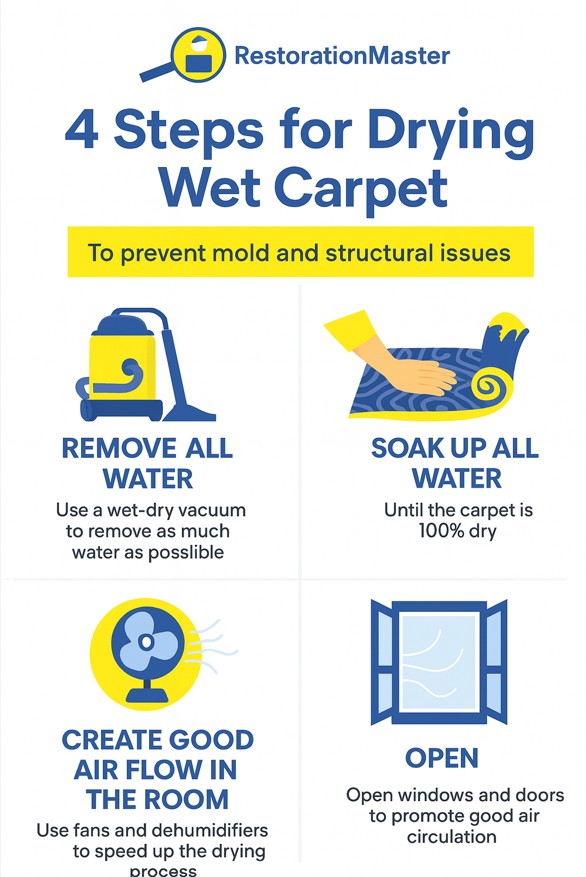
To take the necessary steps to properly remove water from your carpet and ensure it’s thoroughly dried to prevent costly damage to your property, follow these steps:
- Remove all water: Use a wet-dry vacuum to get rid of as much water from the carpet as possible.
- Soak up all water: Once you’ve vacuumed as much water as possible, use towels to absorb any remaining moisture from the carpet. Microfiber towels work well, press them onto the carpet until they’re saturated, then replace them with fresh, dry towels. Repeat this process until the carpet is completely dry.
- Create good air flow in the room: After removing and soaking up all the water, the next step is to create airflow in the room to speed up the dryingDrying is the process of removing moisture from materials, s... More process. The most effective way to do this is by using fans to circulate fresh air. Use as many fans as possible and position them evenly throughout the room to ensure thorough dryingDrying is the process of removing moisture from materials, s... More. Additionally, a dehumidifierA dehumidifier is a device that removes excess moisture from... More can be very helpful, place it near the carpet and remember to empty it regularly to remove excess moisture. For extra ventilationVentilation is the process of exchanging or circulating air ... More, open windows and doors to allow natural airflow to assist in dryingDrying is the process of removing moisture from materials, s... More out the carpet.
Following these carpet dryingDrying is the process of removing moisture from materials, s... More tips after water damage can greatly reduce the risk of moldMold is a type of fungus that grows in damp or humid conditi... More and structural issues.
Related Information: How to Remove Water Stains From Carpet?
Professional Water Damage Restoration
DryingDrying is the process of removing moisture from materials, s... More a wet carpet quickly and thoroughly is essential to protect your home from moldMold is a type of fungus that grows in damp or humid conditi... More, mildewMildew is a type of fungus that grows on damp surfaces, typi... More, and costly structural damage. While you can start the process by removing water and improving airflow, professional carpet drying services ensure a deeper, safer clean, especially if the water is contaminated.
Knowing the categories of water damage helps you decide when DIY dryingDrying is the process of removing moisture from materials, s... More is appropriate and when it’s safer to replace affected materials. Ultimately, fast action and informed decisions can make all the difference in restoring your home safely and effectively after floodingFlooding is the overflow or accumulation of water in areas t... More or water damage.
If your carpets have been soaked by floodingFlooding is the overflow or accumulation of water in areas t... More or heavy rain, don’t wait—call a water damage restorationWater damage restoration is the professional process of clea... More professional. They use advanced dryingDrying is the process of removing moisture from materials, s... More equipment and proven techniques to prevent moldMold is a type of fungus that grows in damp or humid conditi... More growth, protect your home’s structureStructure refers to the framework or components of a buildin... More, and restore your space quickly and safely. Acting fast can save you from bigger, costlier problems down the line. Contact a professional for an expert assessment and reliable carpet water damage restoration process.
Frequently Asked Questions
Can a wet carpet be saved after a flood?
Yes—if the water is clean (Category 1) and dryingDrying is the process of removing moisture from materials, s... More begins quickly, most carpets can be salvaged. However, if the water is contaminated (Category 2 or 3), or if the carpet remains wet for more than 48 hours, it may need to be replaced due to moldMold is a type of fungus that grows in damp or humid conditi... More and health concerns.
Should I remove carpet padding after flooding?
In many cases, yes. Carpet padding absorbs water easily and is difficult to dry completely. If it has been exposed to Category 2 or 3 water or remains damp for more than a day or two, it’s best to remove and replace it to prevent moldMold is a type of fungus that grows in damp or humid conditi... More and odorAn odor is a smell, often detectable by the human nose, whic... More issues.
Can I use a regular fan to dry my carpet?
A regular fan might help, but it’s usually not powerful enough to fully dry carpet and padding—especially after floodingFlooding is the overflow or accumulation of water in areas t... More. For best results, use multiple high-speed fans or rent industrial air movers. These push air across the surface and through the fibers to speed up evaporationEvaporation is the process by which a liquid, such as water,... More.
Is it okay to walk on wet carpet while it’s drying?
It’s best to avoid walking on wet carpet to prevent spreading moisture and dirt. Walking on it can also cause the carpet fibers to mat down and slow the dryingDrying is the process of removing moisture from materials, s... More process. If you must walk across it, wear clean shoes or lay down towels or plastic.
When should I call a professional to dry my carpet?
Call a water damage professional if:
- The carpet was soaked by Category 2 or 3 water (e.g., sewageSewage is wastewater containing biological and chemical cont... More or appliance leaks)
- It’s been wet for more than 24-48 hours
- You notice a musty smell or discoloration
- The affected area is large or includes subfloorThe subfloor is the foundational layer beneath flooring mate... More or drywall damage
Professionals use moisture meters, air movers, and dehumidifiers to make sure the area is fully dry and mold-free.
How do I know if my carpet is dry underneath?
Even if the surface feels dry, the padding and subfloorThe subfloor is the foundational layer beneath flooring mate... More could still be damp. Use a moisture meterA moisture meter is a device used to measure the moisture le... More (available at most hardware stores) to check underneath. A dry carpet should show a moisture reading of 15% or lower. If you’re unsure, it’s worth calling in an expert to assess.
How much does it cost to dry out a carpet professionally?
Costs vary depending on the size of the area and water category. On average, professional carpet dryingDrying is the process of removing moisture from materials, s... More ranges from $200 to $1,000 or more. If moldMold is a type of fungus that grows in damp or humid conditi... More removal or replacement is needed, the price can increase. Many restorationRestoration is the process of returning a property to its pr... More companies offer free assessments and can help with insurance claims.

About Vince Sandri
Vince Sandri is a content writer and blogger with more than 12 years of experience. His expertise is in creating content related to disaster restorationRestoration is the process of returning a property to its pr... More, including information about preventing and reacting to natural disasters like floodingFlooding is the overflow or accumulation of water in areas t... More, water damage, fire and smoke damage, moldMold is a type of fungus that grows in damp or humid conditi... More growth, storm damage and more.
Vince has been the main contributor to RestorationMasterFinder.com since 2014. Over that time, he has written numerous service pages and blogs for disaster restorationRestoration is the process of returning a property to its pr... More providers featured on RestorationMasterFinder.com. Vince has done extensive research and covered a wide range of topics relating to disaster restorationRestoration is the process of returning a property to its pr... More to help homeowners, business owners, and property managers better protect their property. He understands the problems that disasters like floodingFlooding is the overflow or accumulation of water in areas t... More, fire, smoke, and moldMold is a type of fungus that grows in damp or humid conditi... More can cause as well as the best ways to respond to these issues to limit the damage.
Vince completed his Bachelor of Arts degree at Aurora University and his master’s degree at DePaul University. He has been writing SEO website pages, blogs, and press releases since 2012. Vince is also a musician and can be seen playing in the Chicago, IL area.