






How to React to Mold When Spring Cleaning
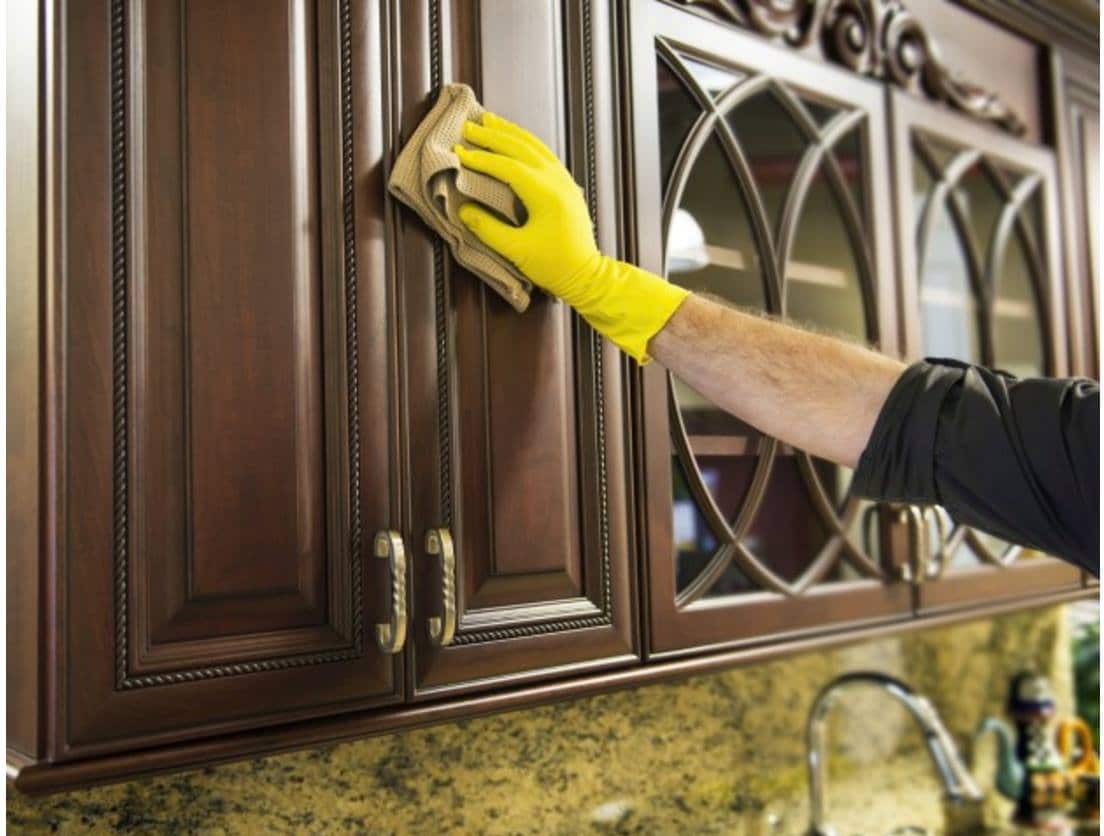
Spring is a time of the year when many people set aside time to conduct a deep home cleaning. People clean up dirt and dust that has accumulated throughout the year, and some people even clean up their personal items, donating old belongings and contents that are no longer of any use.
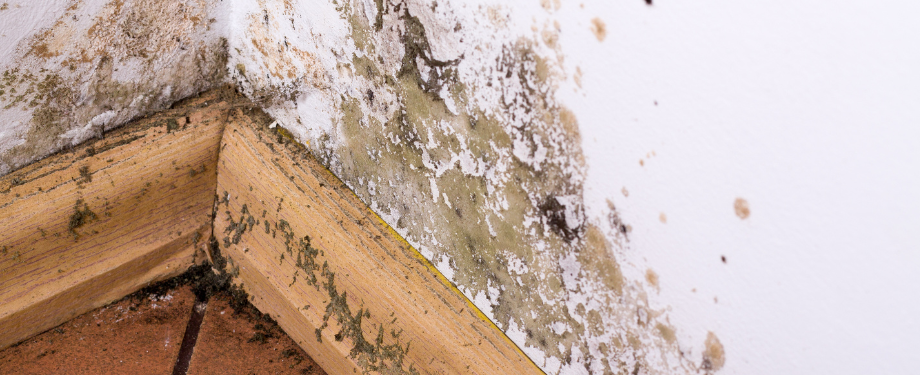
During this spring cleaning, you may find that more than just dust and dirt have accumulated in your home. You might come across mold colonies growing on your home’s walls and other building materials.
Whether it is just a small amount of mold growth or a large colony of mold, you need to know what to do and act quickly. Otherwise, the mold can cause further damage, spreading to new areas of your home.
Continue reading for tips on how to react to mold when spring cleaning.
Understanding Mold Growth

Small amounts of mold can also be dangerous to your health.
Mold spores are natural to the environment, so whether you are indoors or outdoors, there are mold spores present. Due to this, it is impossible to completely remove mold spores from your home. But it can reach the point where mold is hazardous and potentially harmful to you and your family.
Mold becomes problematic when it grows into colonies, which occurs when the spores encounter the proper conditions. It ruins whatever materials and surfaces it is growing on and can cause some people to suffer from negative health effects, like allergies. With prolonged exposure, people can suffer from more severe health problems.
To grow, mold spores need a food source and a moisture source. Often, mold uses cellulose, an organic substance that is found in many common building materials including wood and drywall, as a food source. Because of this, water damage often leads to mold growth. Mold also thrives in warm, humid environments, making the fungus more of a concern when warmer temperatures arrive.
Act Quickly and Protect Yourself
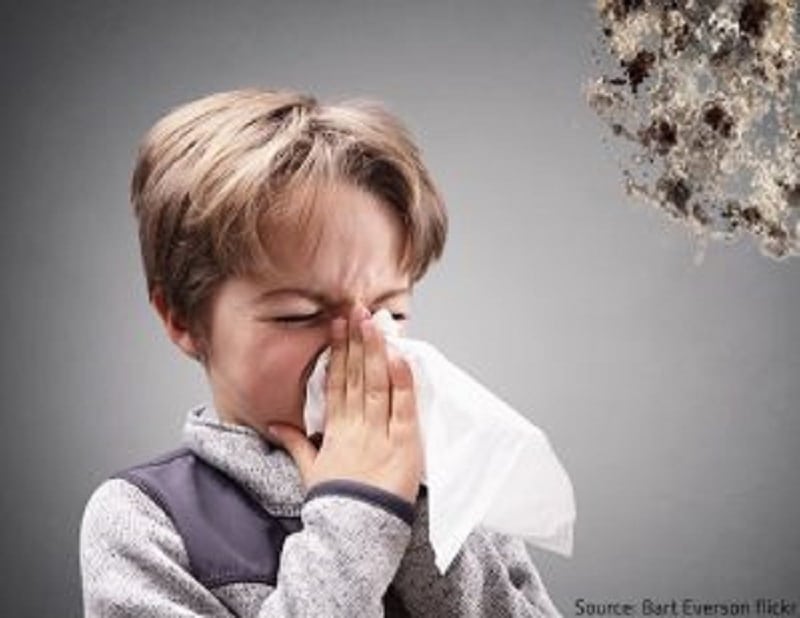
Mold can cause inflammation and allergy flare ups.
Because mold can easily spread to new areas of your property, it is crucial that you act quickly to resolve any mold growth. But you need to also make sure that you protect yourself from the mold.
As aforementioned, mold can cause allergic symptoms that worsen with time, so you want to make sure you are protected from the fungus. At the least, you should wear a mask and gloves when addressing a mold problem.
Locate the Water Source
Before you clean and remove the mold, you need to first address the moisture source that triggered its growth. Otherwise, the mold will have the moisture it needs to continue growing. For example, if a pipe leak caused water damage and, in turn, mold growth, then you first need to stop and fix the leak.
DIY Mold Removal
After you address the moisture source, it is time for mold removal.
If the mold growth in your home affects only a small area, then it is acceptable to use home remedies. Bleach and vinegar are two common items you can use to remove mold.
Using Vinegar
Make sure you are using undiluted vinegar. You will apply the vinegar to the moldy area using either a washcloth or a spray bottle. After allowing it to sit for an hour, rinse the affected section with water.
Using a Bleach Solution
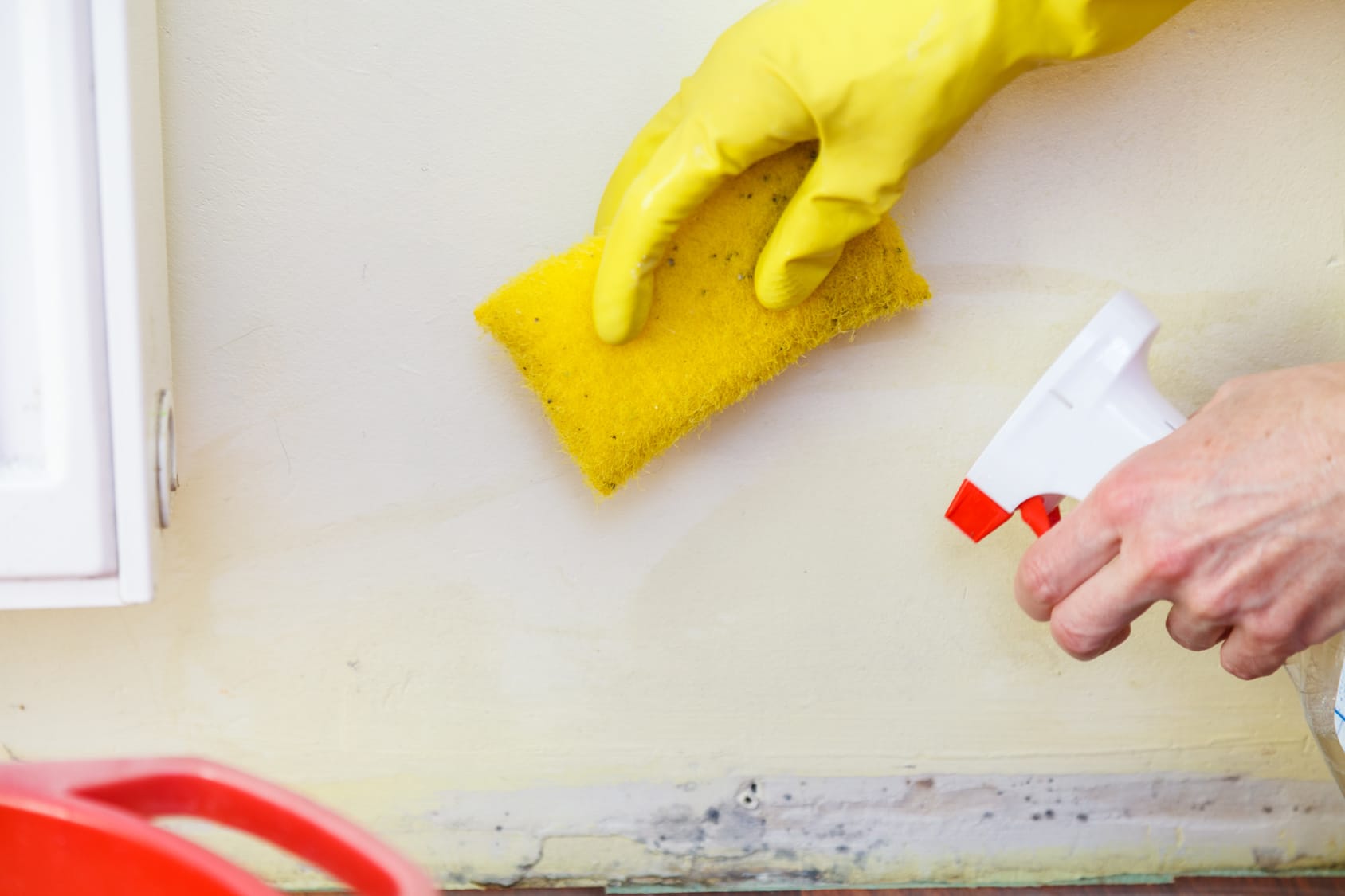
Create a mixture of 10 parts water and 1-part bleach. Put the solution in a spray bottle and spray it on to the affected area. As with the vinegar method, you can also use a washcloth to apply the solution to the moldy section. Allow the area to dry, and repeat the steps as needed.
Using a Borax Solution
Borax is also an option for mold removal; however, this method requires a HEPA-filtered vacuum. You will first use the vacuum to gather any loose mold. Then, create a solution of 5 parts water and 2 parts borax. Use this solution to scrub the affected areas. Allow the section to dry, and repeat these steps if needed.
Get Professional Mold Removal Help
If mold has affected over 10 square feet of your home, then you should not use do-it-yourself mold removal techniques, because it is not safe to do so. The same goes for if you are sensitive to mold, or even if you just do not want to expose yourself to the fungus. These instances require professional help from technicians who are qualified and equipped to handle any case of mold growth.
In the event that your home has mold growing in it, you need to seek help from professional mold remediation services. Within these services, professional technicians will remove all cases of mold growth, including concealed cases, from your home, and clean the affected areas. Furthermore, technicians will work to prevent to mold from growing in your property again. With professional mold remediation help, your home will be a safe environment for you and your family to live in once again.

About Vince Sandri
Vince Sandri is a content writer and blogger with more than 12 years of experience. His expertise is in creating content related to disaster restoration, including information about preventing and reacting to natural disasters like flooding, water damage, fire and smoke damage, mold growth, storm damage and more.
Vince has been the main contributor to RestorationMasterFinder.com since 2014. Over that time, he has written numerous service pages and blogs for disaster restoration providers featured on RestorationMasterFinder.com. Vince has done extensive research and covered a wide range of topics relating to disaster restoration to help homeowners, business owners, and property managers better protect their property. He understands the problems that disasters like flooding, fire, smoke, and mold can cause as well as the best ways to respond to these issues to limit the damage.
Vince completed his Bachelor of Arts degree at Aurora University and his master’s degree at DePaul University. He has been writing SEO website pages, blogs, and press releases since 2012. Vince is also a musician and can be seen playing in the Chicago, IL area.