



3 Things You Should Know Before You Try Mold Removal Yourself
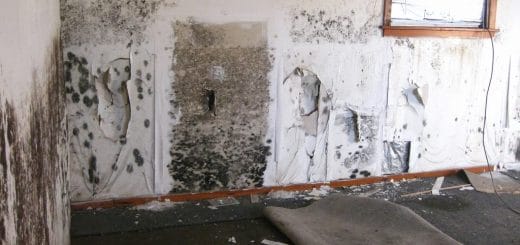
MoldMold is a type of fungus that grows in damp or humid conditi... More can grow on many surfaces in your home after a water damage event, such as a flood, broken pipe, or roof leak. Any time materials in your home are wet or damp for an extended period; you should investigate the possibility of mold growth. Before you try to remove the moldMold is a type of fungus that grows in damp or humid conditi... More yourself, consider these three things:
First: Find Hidden Mold
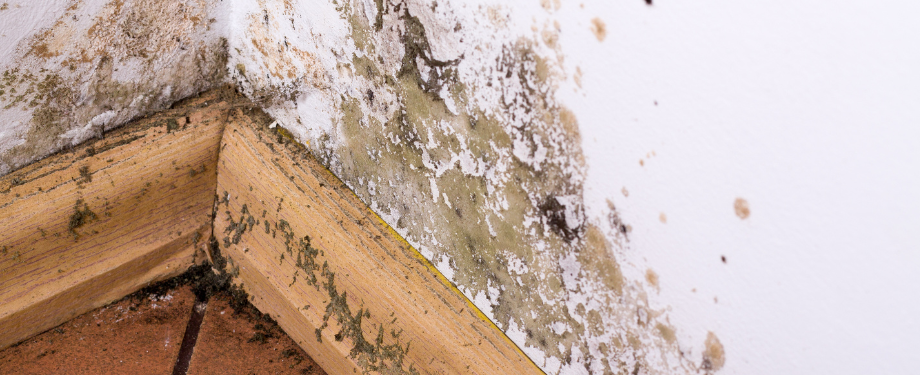
MoldMold is a type of fungus that grows in damp or humid conditi... More grows best in dark, moist places. This means that if you’ve found a spot of visible moldMold is a type of fungus that grows in damp or humid conditi... More, there may be more concealed under the floor, behind drywall, or in other nearby spaces. MoldMold is a type of fungus that grows in damp or humid conditi... More removal is only effective if you can eliminate all of the molds. If you only clean up the moldMold is a type of fungus that grows in damp or humid conditi... More you can see, chances are it will grow back.
Identify the sources of moisture and remove them. Keep in mind that porousPorous describes a material that contains small openings or ... More building materials such as sheet rock and wooden beams can take a long time. A piece of wood that looks dry on the surface may still be quite moist in the interior. That moisture will eventually come to the surface, creating conditions for moldMold is a type of fungus that grows in damp or humid conditi... More to regrow.
Second: Protect Yourself During Mold Removal
MoldMold is a type of fungus that grows in damp or humid conditi... More can cause respiratory problems in sensitive individuals. When you undertake a mold removal project, some of the moldMold is a type of fungus that grows in damp or humid conditi... More sporesSpores are microscopic reproductive units of fungi or mold t... More will be disturbed and released into the air. If you have respiratory problems, such as asthma, or other health problems that may be impacted by contact with moldMold is a type of fungus that grows in damp or humid conditi... More, you should not attempt moldMold is a type of fungus that grows in damp or humid conditi... More removal yourself.
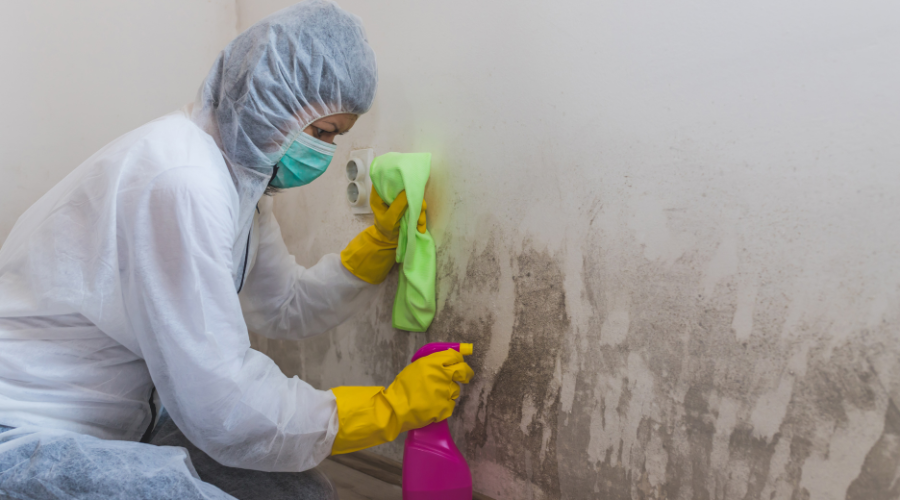
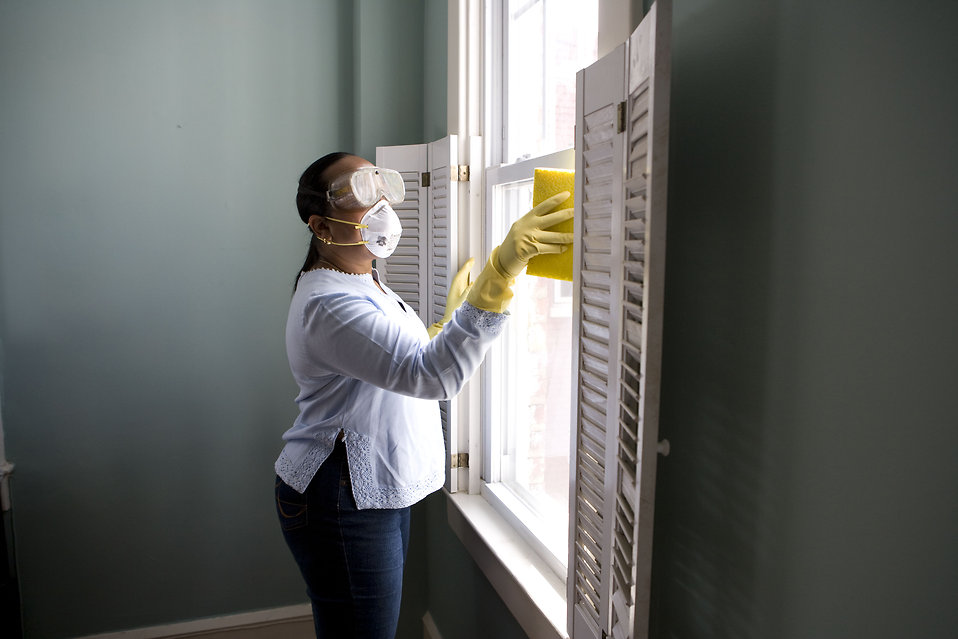
If you decide to proceed with moldMold is a type of fungus that grows in damp or humid conditi... More removal, wear a respirator to filter out moldMold is a type of fungus that grows in damp or humid conditi... More sporesSpores are microscopic reproductive units of fungi or mold t... More. Use rubber gloves and eye goggles to protect your skin and eyes from floating moldMold is a type of fungus that grows in damp or humid conditi... More sporesSpores are microscopic reproductive units of fungi or mold t... More, and wear old clothing that covers your skin and that can be washed separately or thrown away after the moldMold is a type of fungus that grows in damp or humid conditi... More removal project.
Third: Know When to Call a Water Damage Restoration Crew
You may be able to effectively clean a small area of moldMold is a type of fungus that grows in damp or humid conditi... More yourself. However, if your moldMold is a type of fungus that grows in damp or humid conditi... More problem is widespread or you suspect there may be moldMold is a type of fungus that grows in damp or humid conditi... More hidden within the structureStructure refers to the framework or components of a buildin... More of your home, it is best to call a water damage restoration crew. They will have the tools and expertise to safely remove all of the molds from your home and will repairRepair is the act of fixing or restoring damaged property, m... More the source of moisture to prevent moldMold is a type of fungus that grows in damp or humid conditi... More from regrowing.

About Vince Sandri
Vince Sandri is a content writer and blogger with more than 12 years of experience. His expertise is in creating content related to disaster restorationRestoration is the process of returning a property to its pr... More, including information about preventing and reacting to natural disasters like floodingFlooding is the overflow or accumulation of water in areas t... More, water damage, fire and smoke damage, moldMold is a type of fungus that grows in damp or humid conditi... More growth, storm damage and more.
Vince has been the main contributor to RestorationMasterFinder.com since 2014. Over that time, he has written numerous service pages and blogs for disaster restorationRestoration is the process of returning a property to its pr... More providers featured on RestorationMasterFinder.com. Vince has done extensive research and covered a wide range of topics relating to disaster restorationRestoration is the process of returning a property to its pr... More to help homeowners, business owners, and property managers better protect their property. He understands the problems that disasters like floodingFlooding is the overflow or accumulation of water in areas t... More, fire, smoke, and moldMold is a type of fungus that grows in damp or humid conditi... More can cause as well as the best ways to respond to these issues to limit the damage.
Vince completed his Bachelor of Arts degree at Aurora University and his master’s degree at DePaul University. He has been writing SEO website pages, blogs, and press releases since 2012. Vince is also a musician and can be seen playing in the Chicago, IL area.